Population Level Forensic Epidemiology Paper "Global Implications of Vaccination and Rising Infant Mortality in the Philippines" published. Timing of Rising Mortality and Changes in Causes of Death
gives clear evidence of catastrophic signal of infant harms temporally linked with the Philippines National Immunization Program and maternal COVID-19 vaccination. Has global implications.

Background
Over the pandemic years I have developed a rather morbid fascination with the impacts of the pandemic on population health, particularly in terms of births and deaths. Thus, I have been studying population outcomes in multiple countries for the past 6 years.
Living and working in the Philippines for the past 28 years, I took a particular interest in the Philippines situation, particularly as I experienced their pandemic response firsthand. I was fortunate to be called as an expert witness to the excess deaths inquiry (Philippines had 43.2% excess deaths in 2021 exactly correlating with COVID-19 vaccination rollouts, and deaths nearly 3x expected level in September 2021) which was held from 2022 to 2023. However, that exercise was adjourned and never concluded.
Philippines Statistics Authority (PSA) publishes very comprehensive annual mortality and COD data; the best I have seen from any country! Early in 2025, I was reviewing published 2023 mortality data and found that PSA publishes infant mortality by age of infant. This piqued my interest as the data showed rises in infant mortality at certain ages of infant. I did not expect this because one would expect that even though some infants who are born with serious condition die, one would not expect peaks in deaths for older (stronger) infants. I assessed the data and was shocked. Realizing its significance, I resolved to prepare a paper.
After months of struggling with drafting the paper, I reached out to Nicolas Hulscher on 22 August 2025, summarizing my findings and asking if his group was willing to collaborate. He responded positively and invited me to present my data to McCullough foundation. After presenting the data he assigned some of his research fellows to work with me and led by the wonderful Claire Rogers who asked exactly the right questions, we whipped the paper into shape. Although we had originally intended to publish by the end of 2025 (with data up to 2023), I had also wanted to wait for release of 2024 data in early 2026. Thus, even though the paper was drafted by the end of 2025, we agreed to wait for the formal release of 2024 data in January 2026. I then incorporated 2024 data, and we did the final writeup. All of the other authors critically reviewed the paper, gave valuable inputs based on their expertise, and assisted with the analyses and discussion section. What a wonderful bunch they all are!
This paper is the culmination of more than a year’s work. We believe the findings are very important and the world needs to see what is happening to its children through their compliance with medical mandates. The data from the PSA is exemplary! Other countries are holding identical data, but none except the Philippines has published it. The paper is very long and very technical, pulling together multiple threads of findings, and implicating both vaccination schedules and COVID-19 vaccination in the damning trending of Filipino infant deaths.
This is a population level forensic epidemiological study: looking at all births (41.6 million) and all infant deaths (546,130) from 2000 to 2024. Magazine home page link, and PDF link by clicking on the image below.

A summary of key paper findings follows:
Data Sources
All data used is public domain and available online. Data analyses includes: -
Philippines Statistics Authority, birth and death data 2000 to 2024, covering 41,665,002 registered births and 546,130 registered infant deaths
Philippines Statistics Authority ICD10 breakdowns on Causes of Death (COD)
Malaysian National Vital Statistics on infant births and deaths to 2024
Philippines and Malaysian National Infant Vaccination Schedules
Annual Vaccine uptake by vaccine category from Philippines Department of Health, Field Health Services Information System (FHSIS) annual reports from 2000 to 2024. Provides vaccine uptake for eligible infants.
Philippines COVID-19 Vaccine tracker for population vaccine uptake.
Schedules of immunization campaigns conducted by DOH with the support of WHO / UNICEF in 2022 and 2023, and local vaccination campaign in National Capital Region (NCR) in 2024.
Analyses
No manipulation of data.
Death data for each year was adjusted by registered live births to arrive at death rates.
2020 data was excluded from analysis because the low mortality in that year was highly unusual.
Correlation and significance studies were conducted.
Patterns and causes of mortality, relative to the infant vaccination schedule and national catchup vaccination programs were examined.
Assumptions
Infant mortality should decline across the first year of life as infants grow. All causes of death would also be expected to decline across the first year of life.
Receipt of infant vaccination should be protective against mortality.
Key Findings
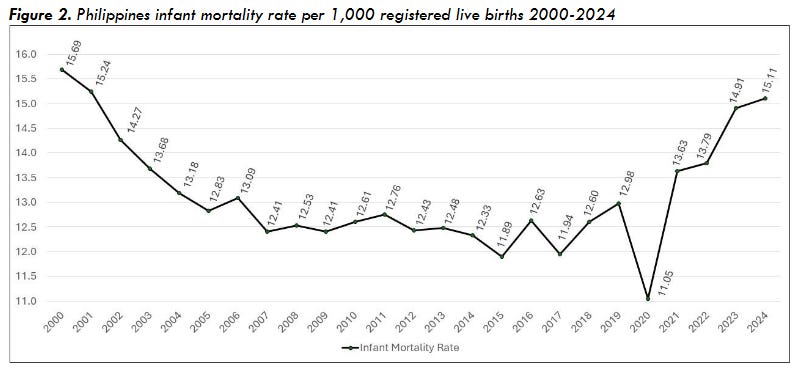
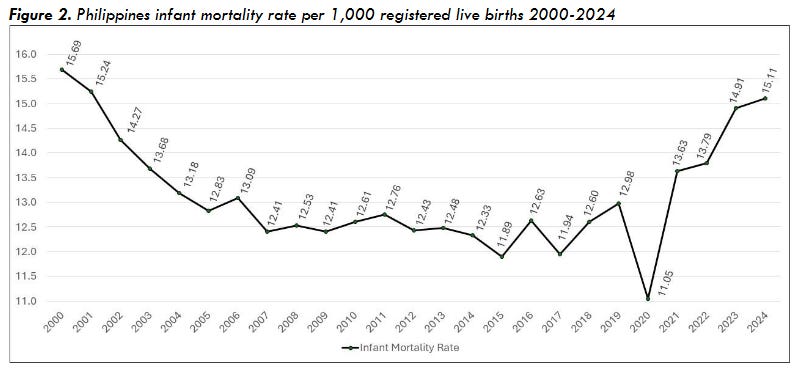
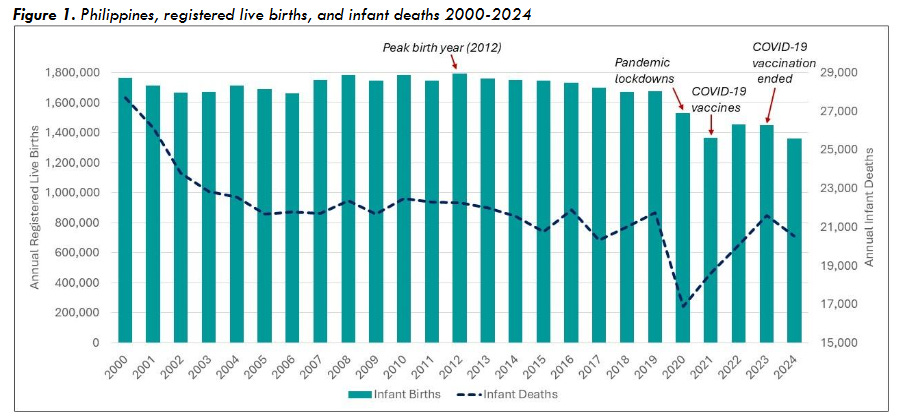
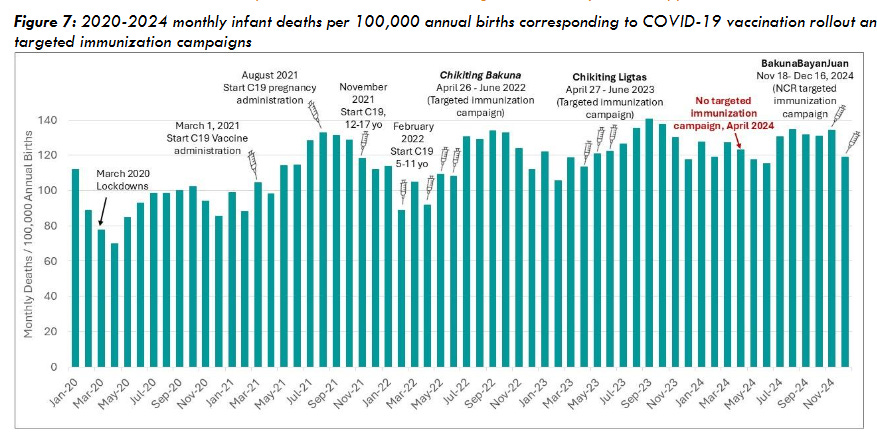
Infant mortality dropped from 15.69 (2000) to 12.83 (2005), was mostly stable up to 2019 (average 12.59), dropped to 11.05 (-14.9%) in 2020, but rose to 15.11 (+37%) 2024. 2024 infant mortality reached its highest level in 23 years; highest since 2001. The increase in infant mortality since 2020 is highly statistically significant (p < 0.0001).
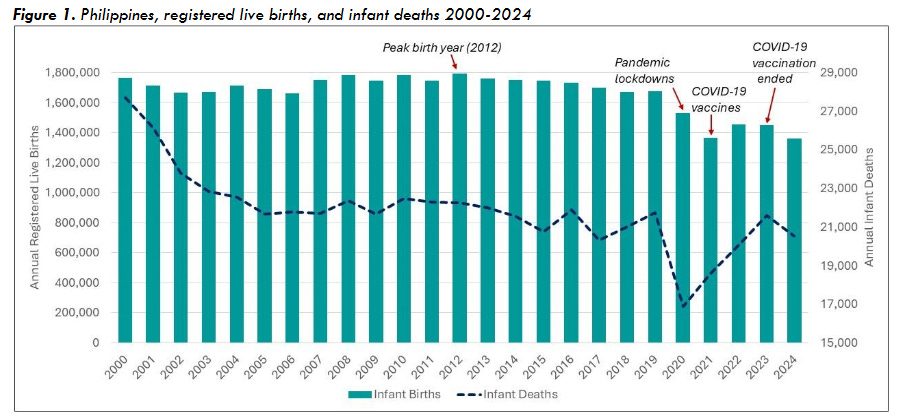
Births rose by 0.14% annual average from 2000 to 2012, peaking at 1.79 million in 2012, fell by annual averages of 1.0% to 1.67 million by 2019, and further by annual averages of 3.9% to 1.36 million in 2024. The 24% decline in registered live births since 2012 is highly significant.
Postnatal vaccines demonstrate mixed temporal associations with infant mortality trends: higher uptake of live vaccines correlated with falling infant mortality, while inactivated vaccines correlated with rising infant mortality, though not reaching statistical significance.
Pneumococcal Conjugate Vaccine (PCV) uptake rose from 23.5% in 2015 to 76.3% in 2023, but fell to 52.9% in 2024 (vaccine supply shortfalls). PCV uptake was highly statistically correlated with infant mortality (2015-2023: r=0.93, P=0.00074, 2015-2024: r=0.77, p=0.016). There was also no significant decrease in pneumonia deaths despite increasing uptake of this vaccine from 2015 to 2024.
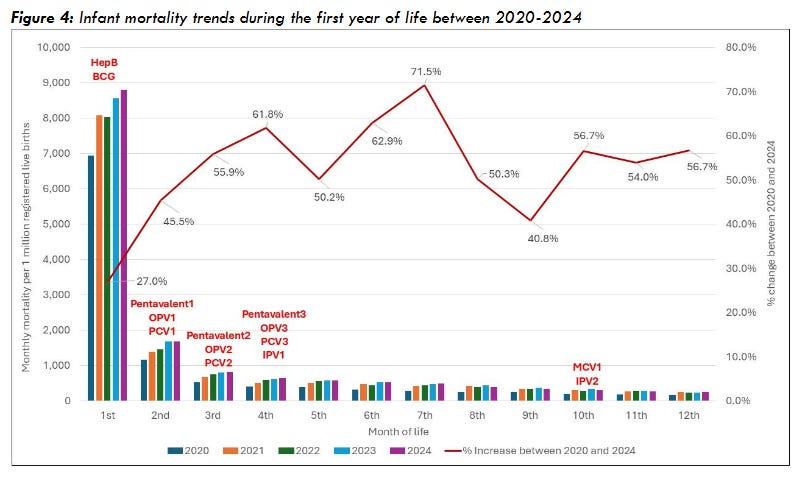
Peaks in infant mortality across the first year of life match the timing of administration of the nation’s standard vaccines. Infant mortality has increased over time from 2020 to 2024.
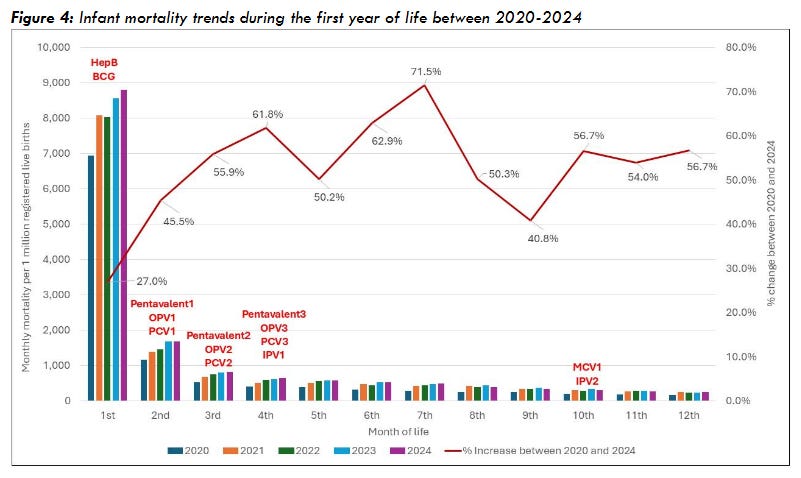
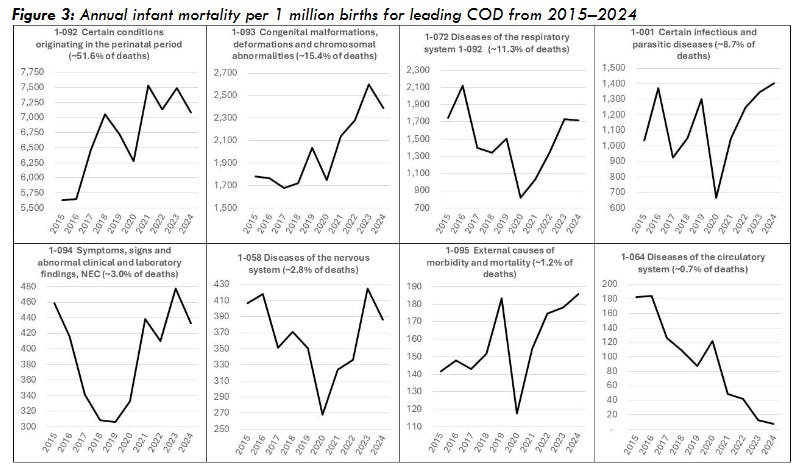
The timing of the infant mortality rate upwards inflections align with the 2021 national COVID-19 vaccination rollout. Between 2020 and 2024 infant mortality from:
Congenital abnormalities increased by 46%.
Respiratory diseases increased by 124%,
Infectious and parasitic diseases increased by +125%
Nervous system diseases increased by +11%, and
unexplained sudden deaths (+106%).
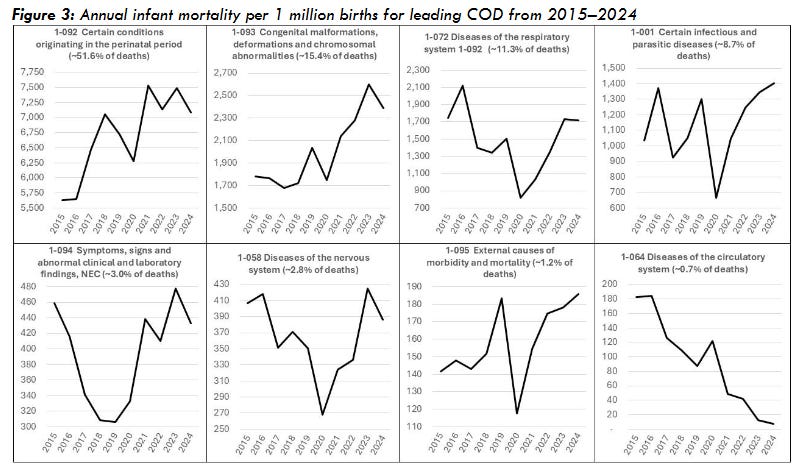
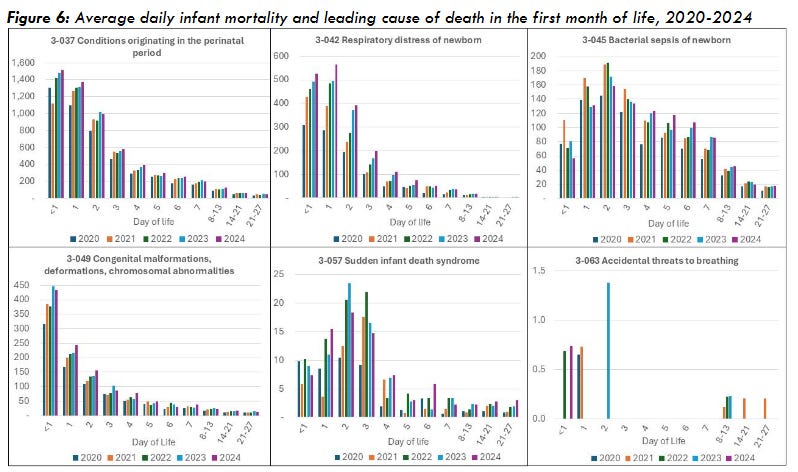
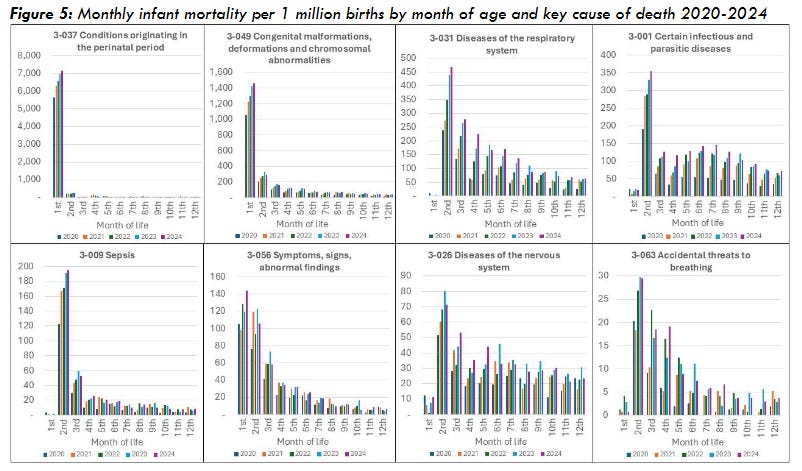
Across the first year of life, there are spikes in deaths on days 1-3 after birth, and spikes in deaths in certain months.
Congenital disease deaths drop over the first year of life, as would be expected for infants born with conditions incompatible with life.
Trending shows increases in various COD from 2020 to 2024; progressively worsening infant health.
Respiratory disease of newborn, bacterial sepsis of newborn, and SIDS show a spike between days 1 to 3 of life. This is suspicious for a trigger around the time of birth.
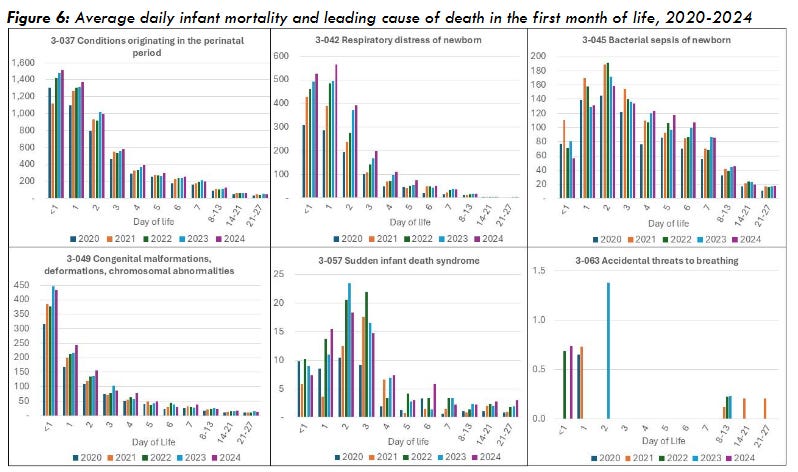
Major change in COD / spike in the 2nd month of life, concurrent with receipt of 6-week PCV, Pentavalent and OPV vaccines. Key causes are Infectious disease, respiratory disease, Sepsis, neurological disease, and suffocation (accidental threats to breathing).
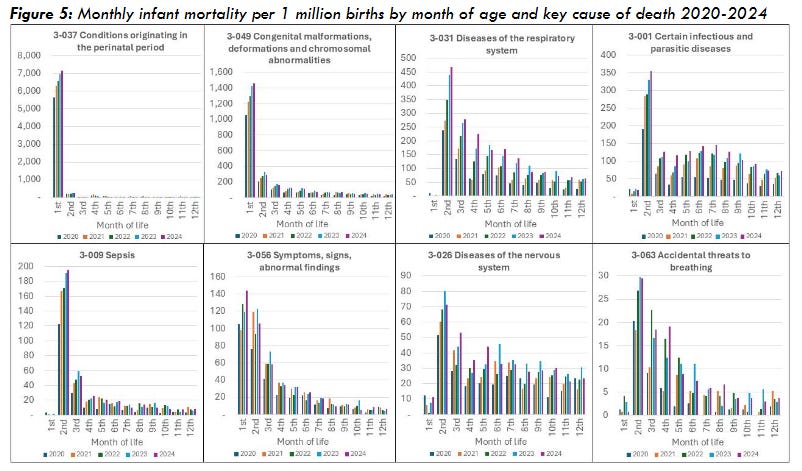
Filipino infants, receiving National Immunization Program vaccines procured from UNICEF, may receive vaccines sourced from Serum Institute of India and containing both aluminum and thimerosal.
Filipino and Malaysian infants, following their national immunization programs, receive the same vaccine antigens but on a different schedule.
Both receive BCG (tuberculosis) and HepB at birth, and measles containing vaccines at 9 and 12 months.
Filipino infants receive pentavalent, OPV, PCV at 6, 10, 14 weeks. IPV at 14 weeks and 9 months.
Malaysian infants receive hexavalent at 2, 4, and 6 months, and PCV at 3 and 5 months.
Both Filipino and Malaysian infants showed rising mortality between 2020 and 2024.
Filipino infant mortality is 2.1x that of Malaysian infants.
Filipino neonatal (1st month) mortality is 1.92x that of Malaysian infants.
Filipino post-neonatal (2nd to 12th month) mortality is 2.39x that of Malaysian infants. Showing that older Filipino infants die at even higher rates than do younger infants.
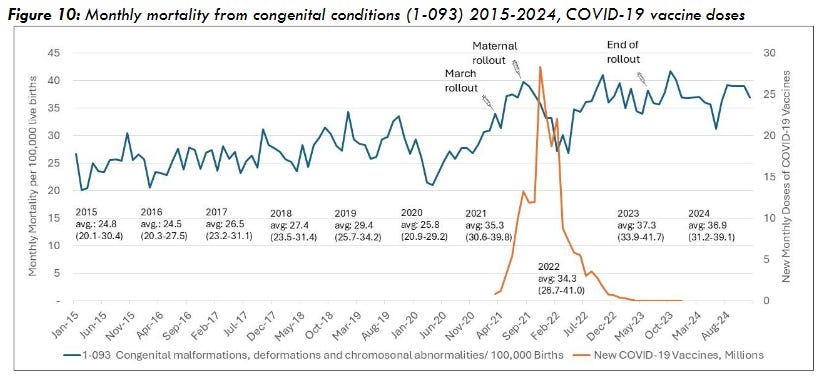
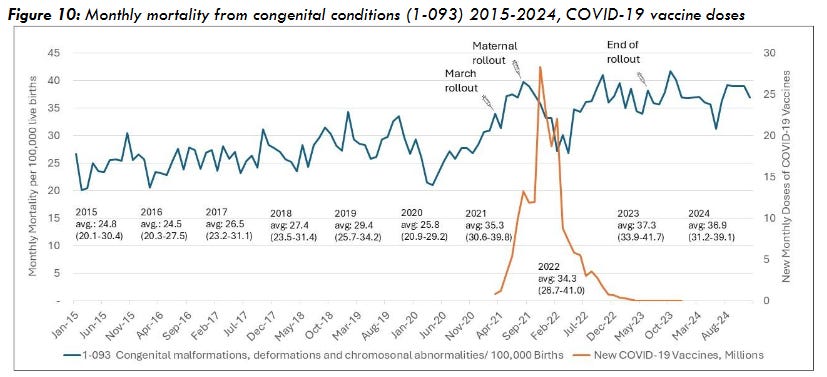
88% of working age Filipinos received COVID-19 vaccination. COVID-19 vaccination was recommended for pregnant and breastfeeding women from August 2021. Population wide vaccination fell by the end of 2022, and the rollout finished in 2023.
Increases across multiple COD categories and fetal-development linked outcomes are evident in the first birth cohorts conceived after large-scale population and maternal COVID-19 vaccination.
Rates of congenital abnormality deaths rose sharply from 2020 to 2023, declined slightly in 2024, but did not return to pre-pandemic levels
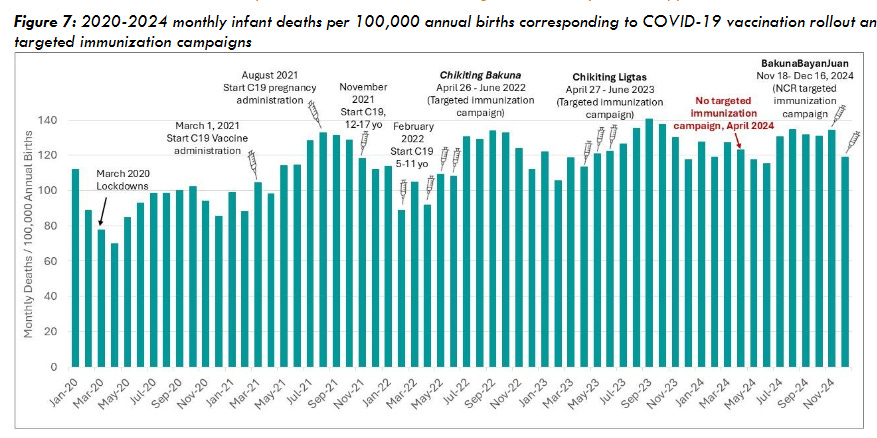
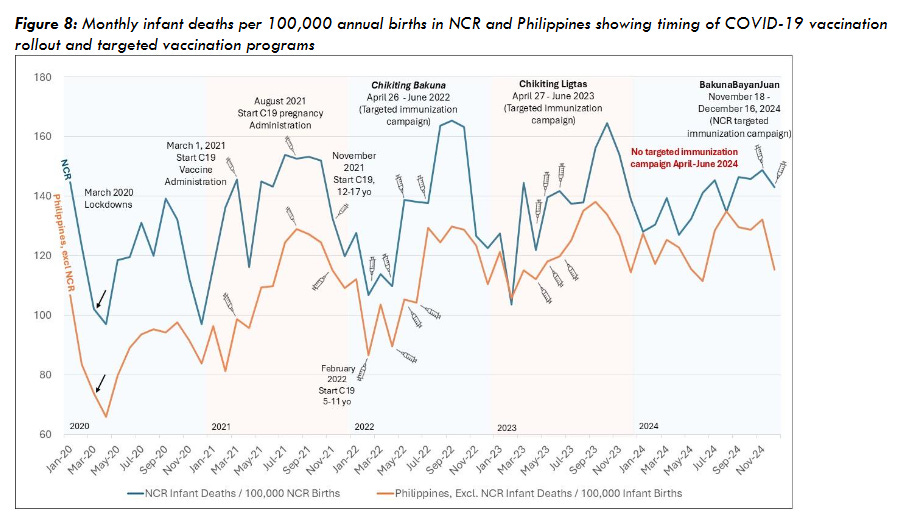
Rises in monthly mortality from July to August were observed following national “catchup” vaccination drives in 2022 and 2023. There was no national vaccination drive in 2024 and no rise in July to August deaths.
National Capital Region (NCR) has among the highest doctor: patient ratios in the Philippines and high infant vaccination uptake. Infant mortality in NCR is 20% higher than in the rest of the Philippines.
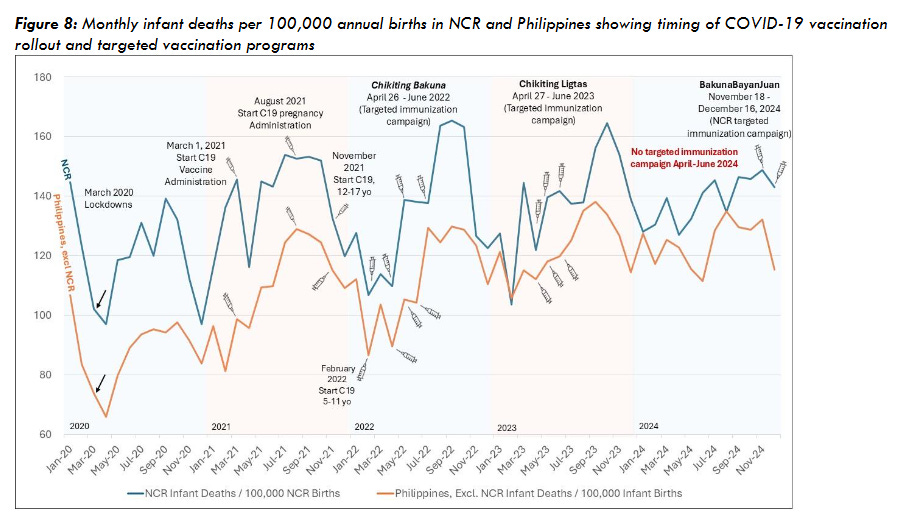
Maternal age at time of birth, birth weight, access to medical care during delivery, breastfeeding rates, and infant malnutrition deaths (poverty indicator) did not show significant changes from 2020 to 2024. Philippines also posted a strong recovery from the peak pandemic years of 2020 and 2021, with economic situation and markers improving through to 2024.
Discussion
Infant mortality is a worst-case outcome; for every death, there will be many other children sick. The patterns of rising mortality reflect a widespread worsening of infant health in the 2nd year of the pandemic and thereafter.
Timing of and infant causes of death imply external factors contributing to worsening infant outcomes. Synergistic harms from heavy and compact infant vaccination schedule to infants born to COVID-19 vaccinated mothers cannot be ruled out given multiple identified harms to fertility and reproductive health from COVID-19 vaccines.
The finding that Filipino infants, who receive the same vaccine schedule as Malaysian infants but on a much earlier more aggressive schedule, have higher mortality implicates risks from early vaccination. The observation that NCR infants who have higher uptake also have higher deaths, supports this observation.
Patterns of deaths support non-specific immune dysfunction, possibly related to receipt of multiple vaccines within a short period.
Conclusion
There are temporal associations between increased and increasing infant mortality and specific aspects of the national vaccination program.
Rises in infant mortality coincide with expanded uptake of the Pneumococcal Conjugate Vaccine (co-administered with pentavalent and polio vaccines).
Further research is needed to investigate possible vaccine-related risks to fetuses and infants, including evidence of mRNA vaccine transfer to placental and reproductive tissues alongside infant mortality inflections temporally aligned with maternal COVID-19 vaccination rollout.
Recommendations
Moratorium on PCV vaccine, the most expensive vaccine on the Philippines National Immunization Schedule, until mechanisms of harm can be ruled out.
Birth Hepatitis B Vaccines only given to infants whose mothers are HepB positive or unknown status / high risk.
Wider spacing of vaccines and delay of vaccination for low-birth-weight infants.
Review of the entire schedule and implications for infant health.
Completeness of Data
For those questioning the completeness of data, please understand that all data is from the same source over time. The trending and signal that is identified is more important than the absolute figures.
Under registration of data, particularly more recent years data, is less likely given the following:-
Hospital-driven birth registration and with 95 - 97% of babies born in hospital setting.
Strong practical/legal incentives for both births (birth certificate is needed to access service) and death certificate for burial, claims, and inheritance handling).
PSA’s multi-month compilation process, typically 7 - 8 months after the close of each calendar year) that actively incorporates late registrations.
Progressive improvements in the civil registration system over time.
Together these make recent PSA registered data (particularly 2015–2024) among the more reliable administrative vital statistics in the region. Under-reporting is less plausible as a primary explanation for the post-2020 patterns the paper identifies (IMR reversal, post-neonatal peaks aligning with vaccination windows, congenital rises, etc.). This paper’s use of consistent PSA/DOH sources across years is a reasonable foundation for raising an alarm and calling for further study.
Acknowledgement
Every global statistics authority has access to similar data for their populations. It is easy and cost-effective to analyze, and very revealing. Only the Philippines has made this data publicly available.
Final Notes
I am of sound mind and in high spirits. I have every reason to live! If anything should happen to me in coming weeks and months, it will not be an accident!
If anyone wants an interview regarding these findings, please reach out to me at SallyAnnClark@proton.me. I very much hope that this paper will mark a new phase in the dialogues and actions surrounding the safety of infant vaccines and vaccination, and indeed all use of vaccinations.
Almost certainly the reduced deaths in 2020 (apparent across the entire population, and particuarly infants) was due to reduced iatrogenic deaths under harsh lockdown conditions.
A new paper showing significant infant mortality associated with the Covid period and mass infant vaccination campaigns in the Philippines. Great work by Super Sally and her co-authors.