
VITAL STATISTICS TO JUNE 2026
Singapore released VS to June 2026 on 14 August 2026. Provided here summary data on births and deaths for that period.
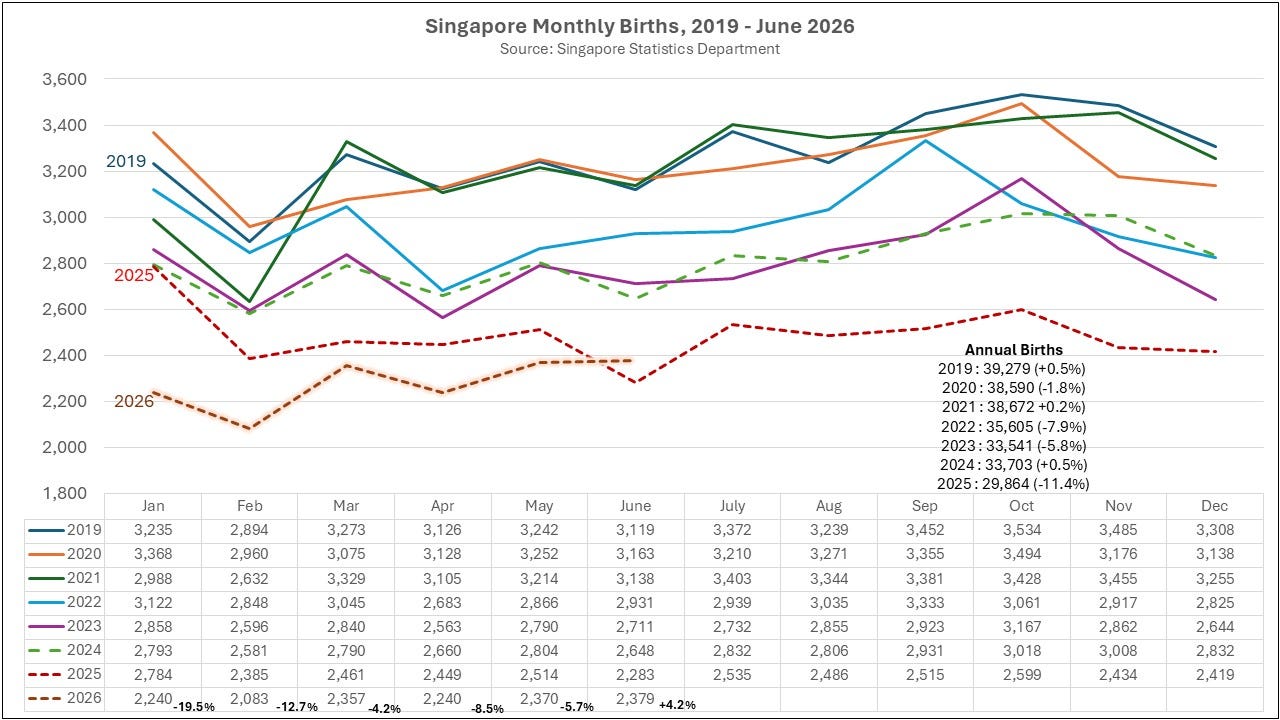
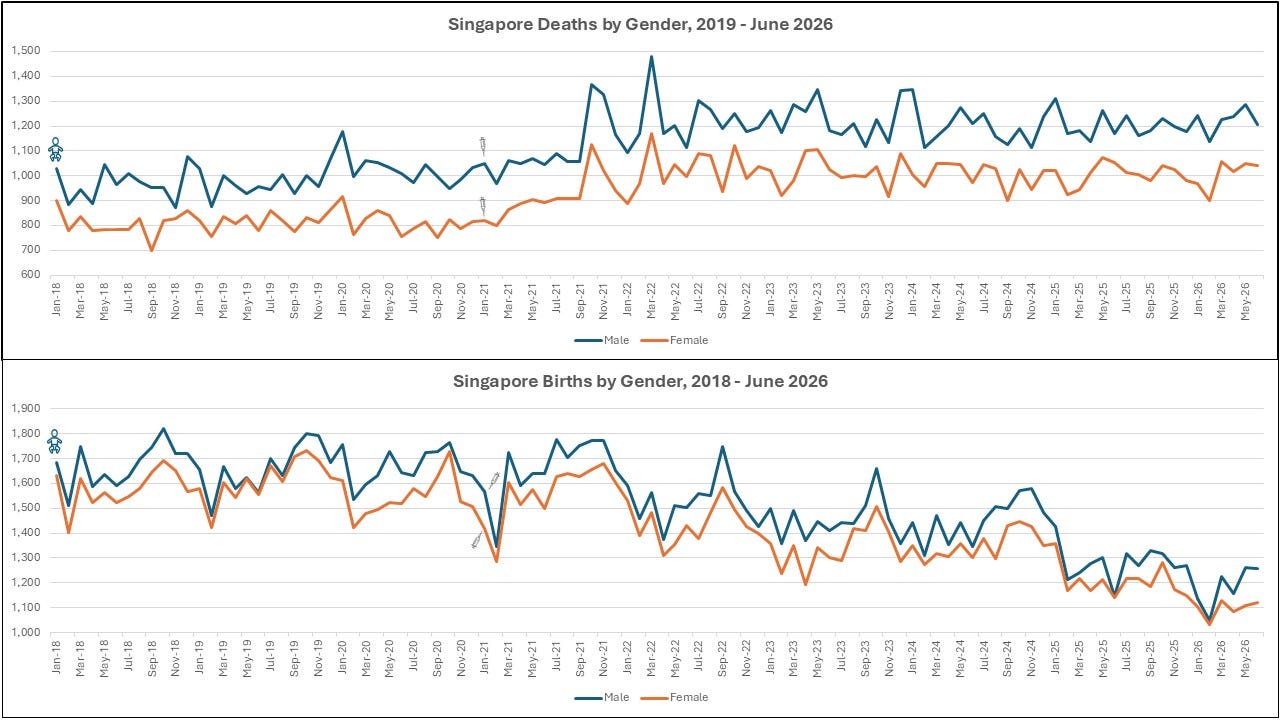
Births to June 2026 are 8.1% lower than the same period in 2025.
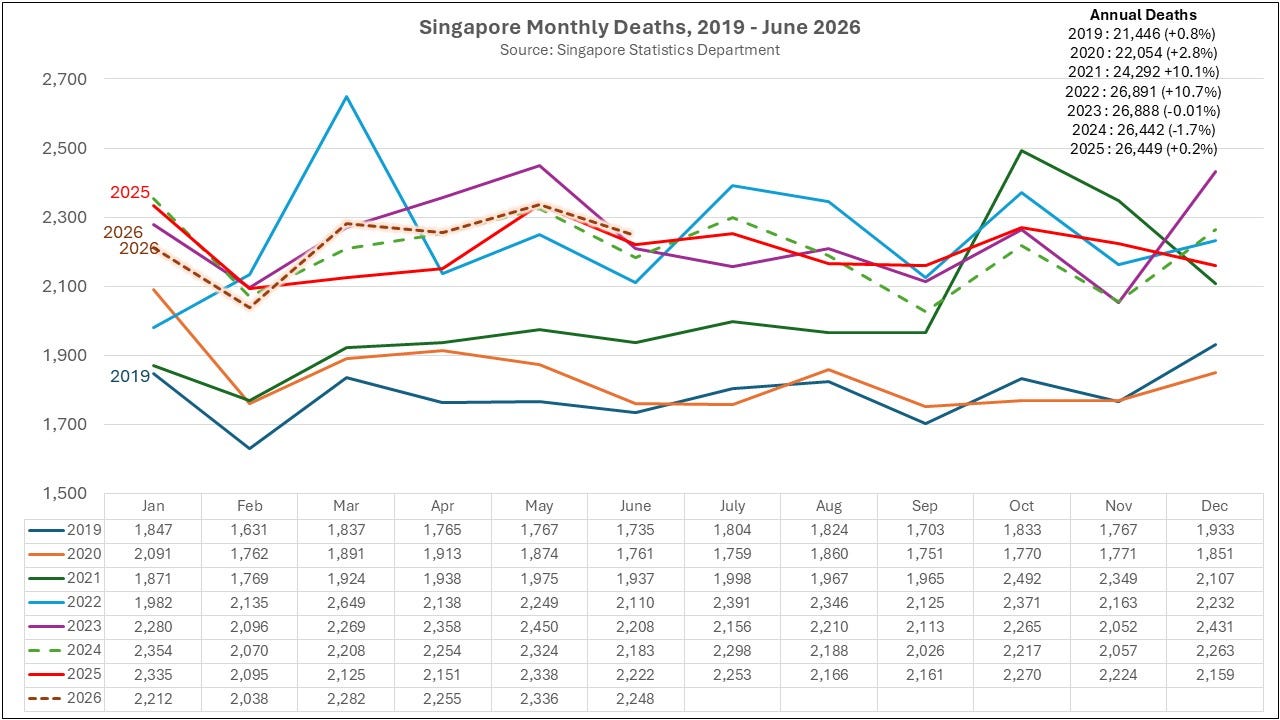
Deaths have risen by 0.8% in first half of 2026.
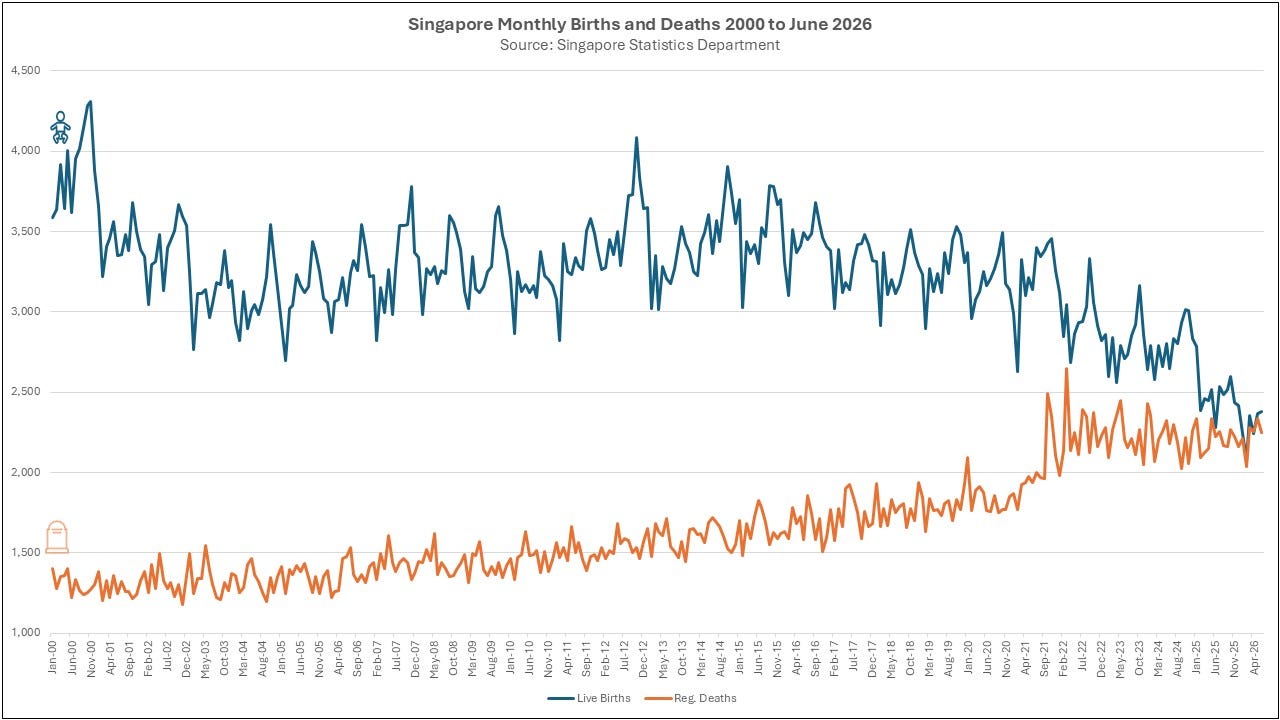
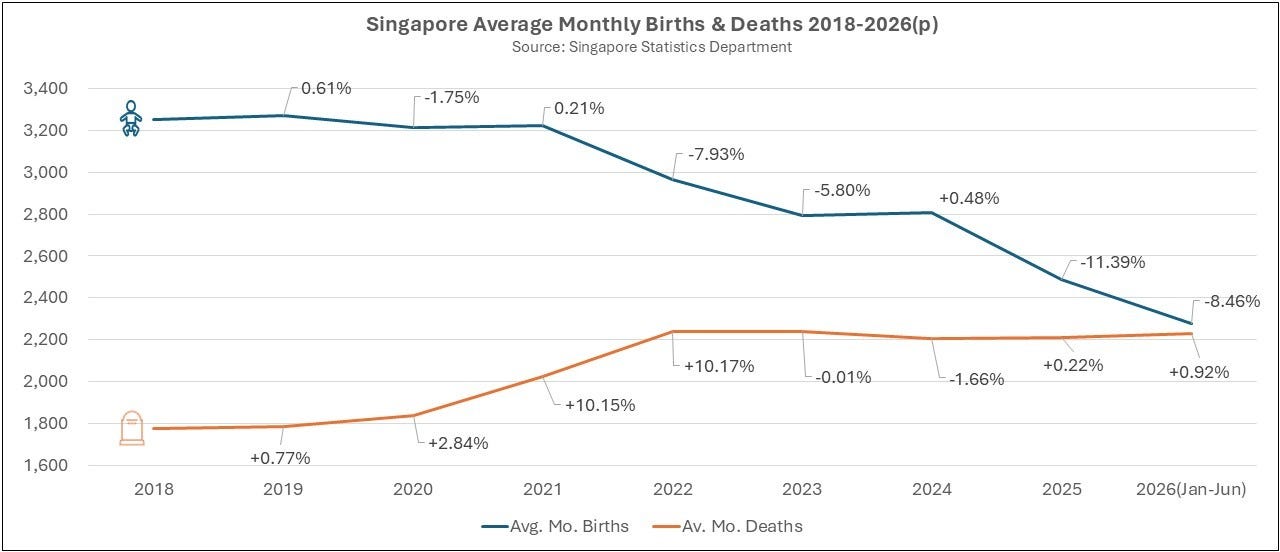
Putting overall patterns into perspective, the following graph shows births and deaths since 2020. Deaths rose specifically concurrent with the booster doses of COVID-19 which were administered starting from 14 September 2021 (deaths rose steeply in September and October 2021). Births fell very sharply from November 2024 and continue to decline.
By 14 September 2021, when 1st booster doses commenced rollout, around 77% of Singaporeans had completed primary series. They should have been protected, yet Singapore had a mass rise in COVID-19 deaths and all-cause mortality.
April 2026 is Singapore’s first month with overall negative population growth; 15 more deaths than births. Natural population increase has declined by 97% between 2019 and 2026 and continues to decline. Singapore is targeting migration to maintain its population!
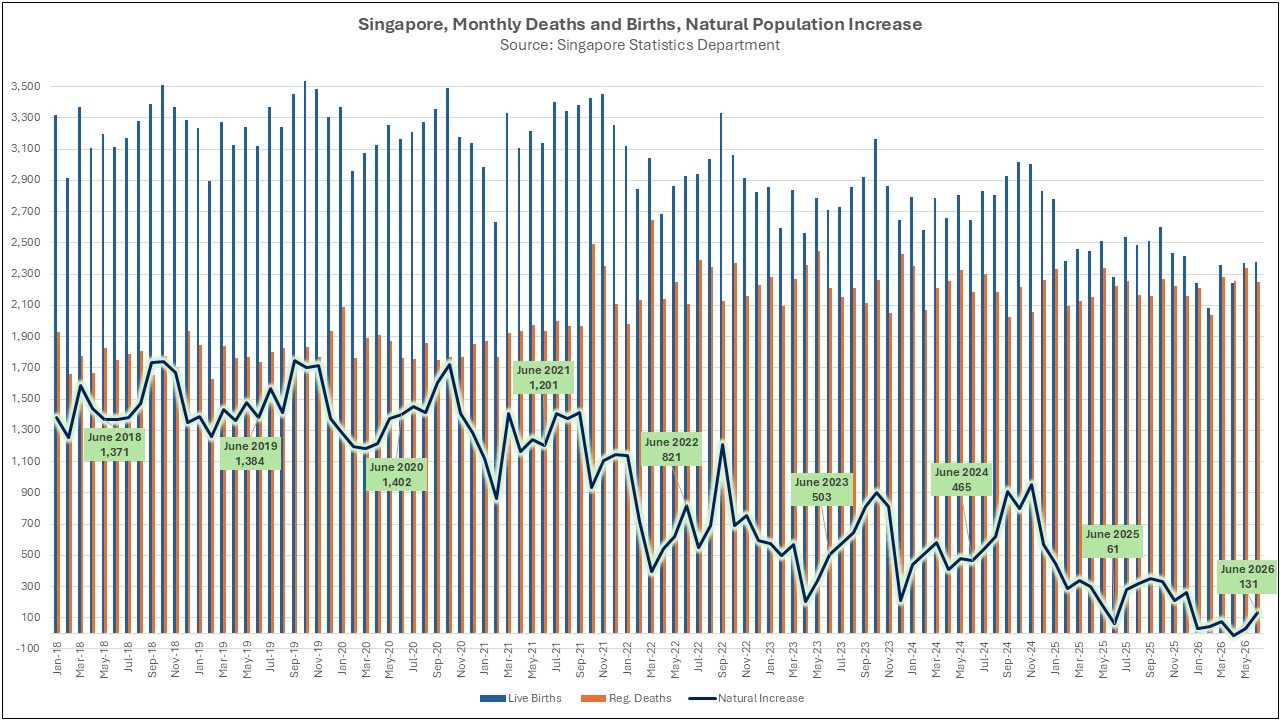


This focus on migration is understandable: Singapore’s natural population increase is down from 1,486 in 2019 to a monthly average of only 50 in 2026.
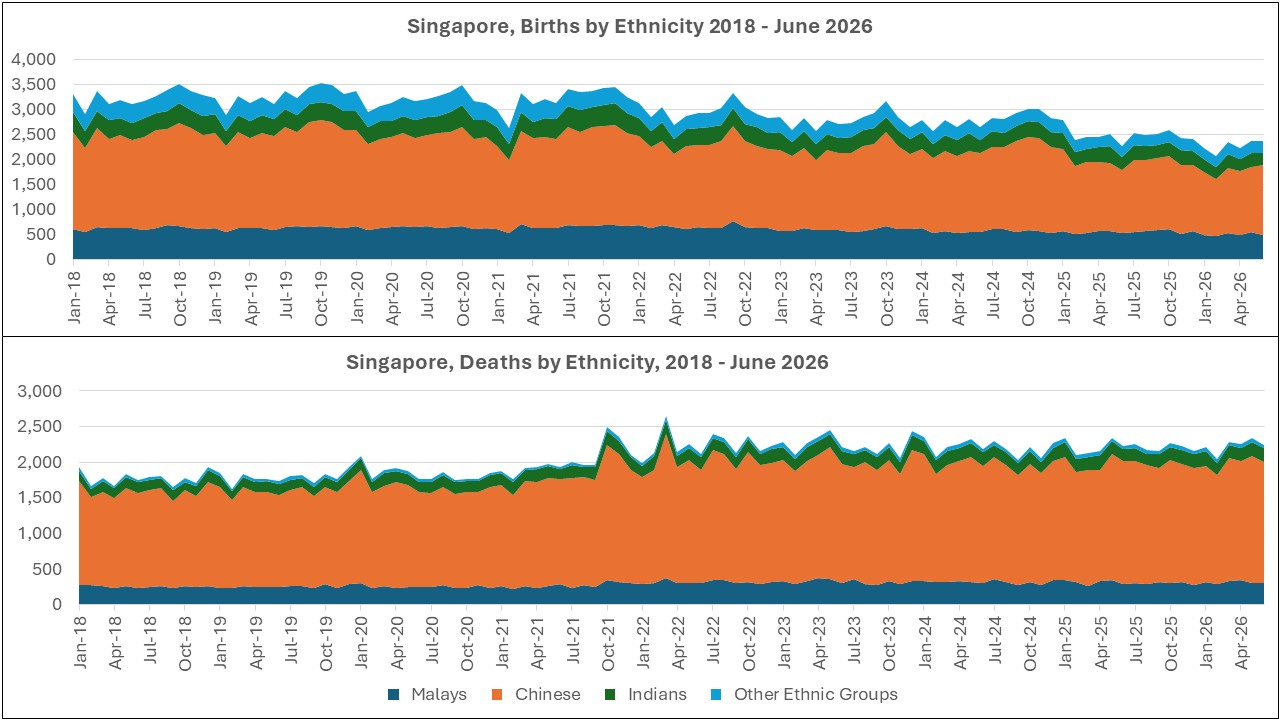
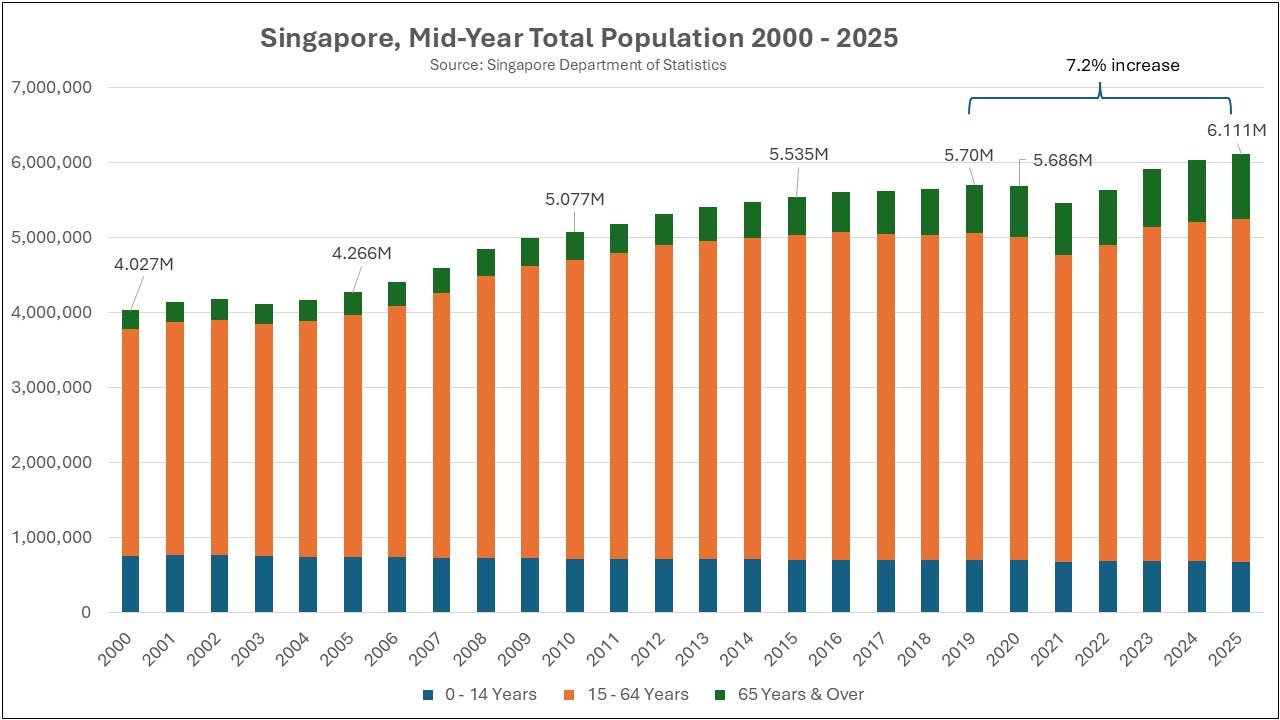
Births and deaths by population ethnicity show overall declining births and still rising deaths across all ethnicities.
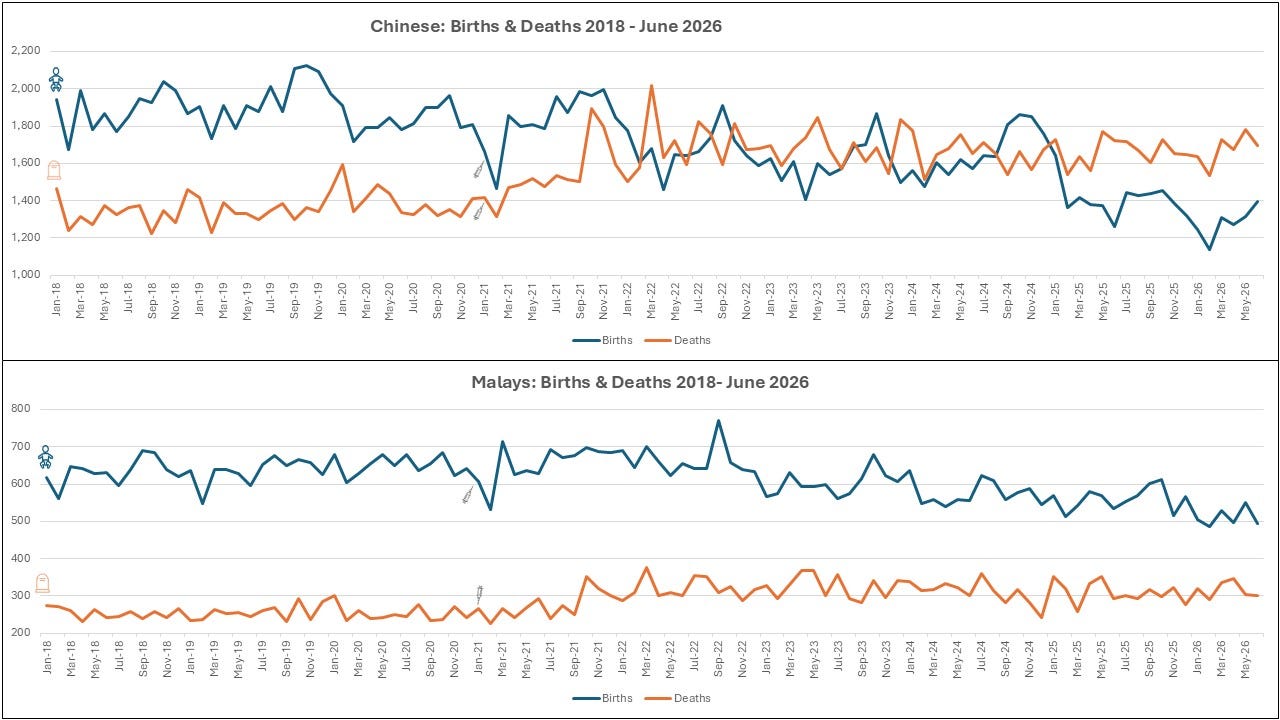
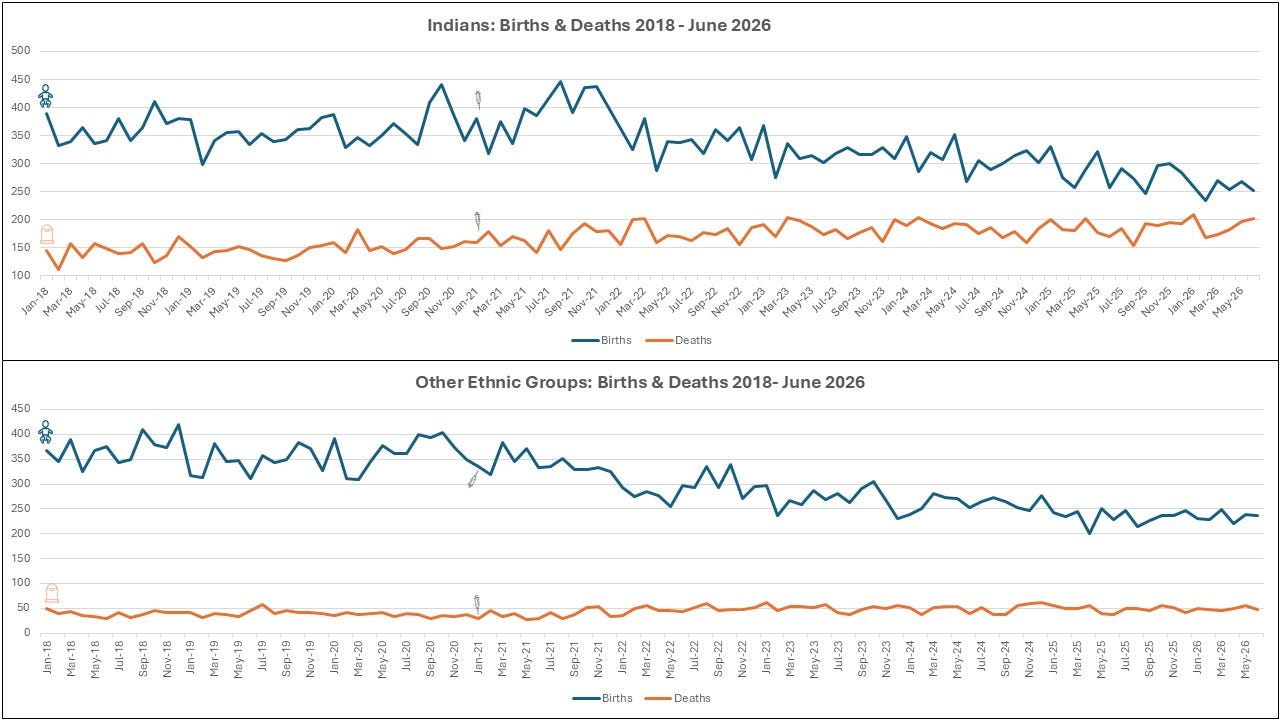
Chinese Singaporeans, the dominant population group, show strong negative population growth since early 2022. Malay Singaporeans and other groups still have births outpacing deaths, though with a narrowing gap.
Births and deaths by gender show higher male than female deaths and births, which is a typical pattern.
MEDICAL CARE UTILIZATION DATA
Patterns of medical care utilization are instructional with regards to overall population health. Annual data on hospital and medical services utilization to June 2026 was released.
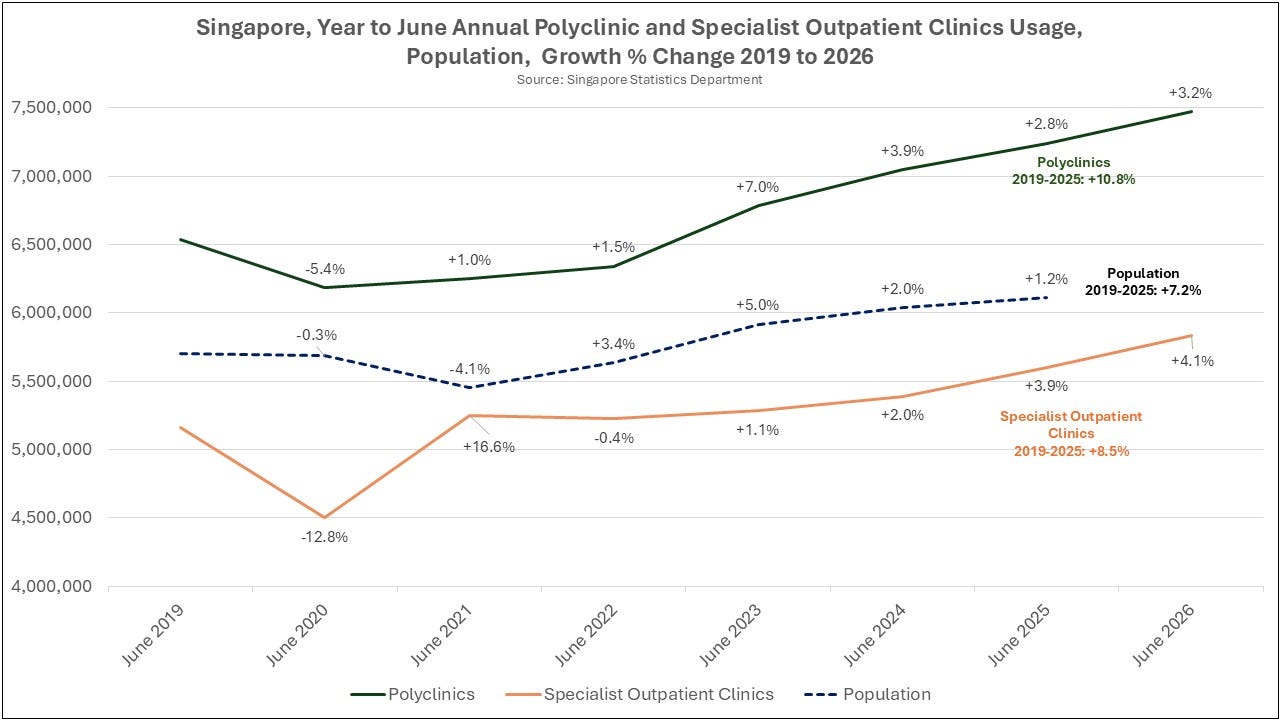
I have analysed this data with respect to changes in population size from 2019 to 2026. We would expect that increases in medical care usage might be proportional to increases in population. Population size is only available to 2025, for now.
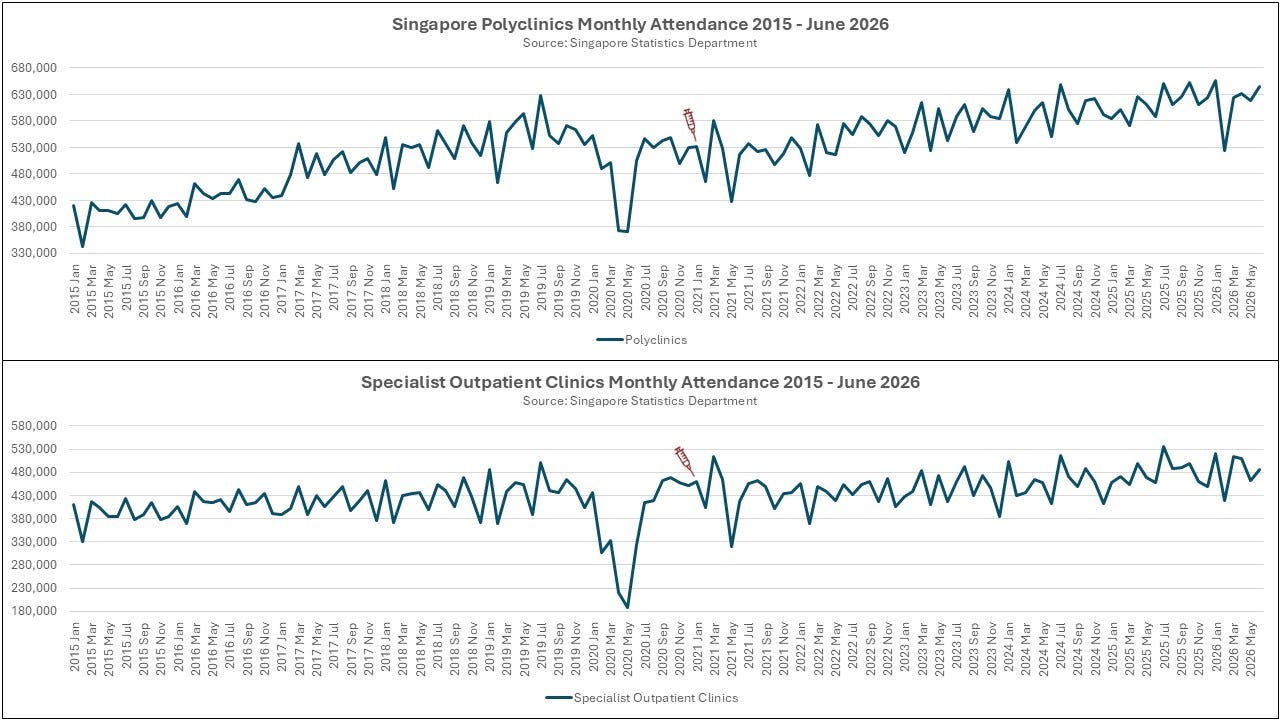
Data on Polyclinic and Specialist outpatient clinic attendance are presented below. January 2021 as rollout of COVID-19 vaccination (start date was 30 December 2020) is marked.
While the population grew by 7.2% between 2019 and 2025, utilization of these services increased by 10.8 and 8.5%.
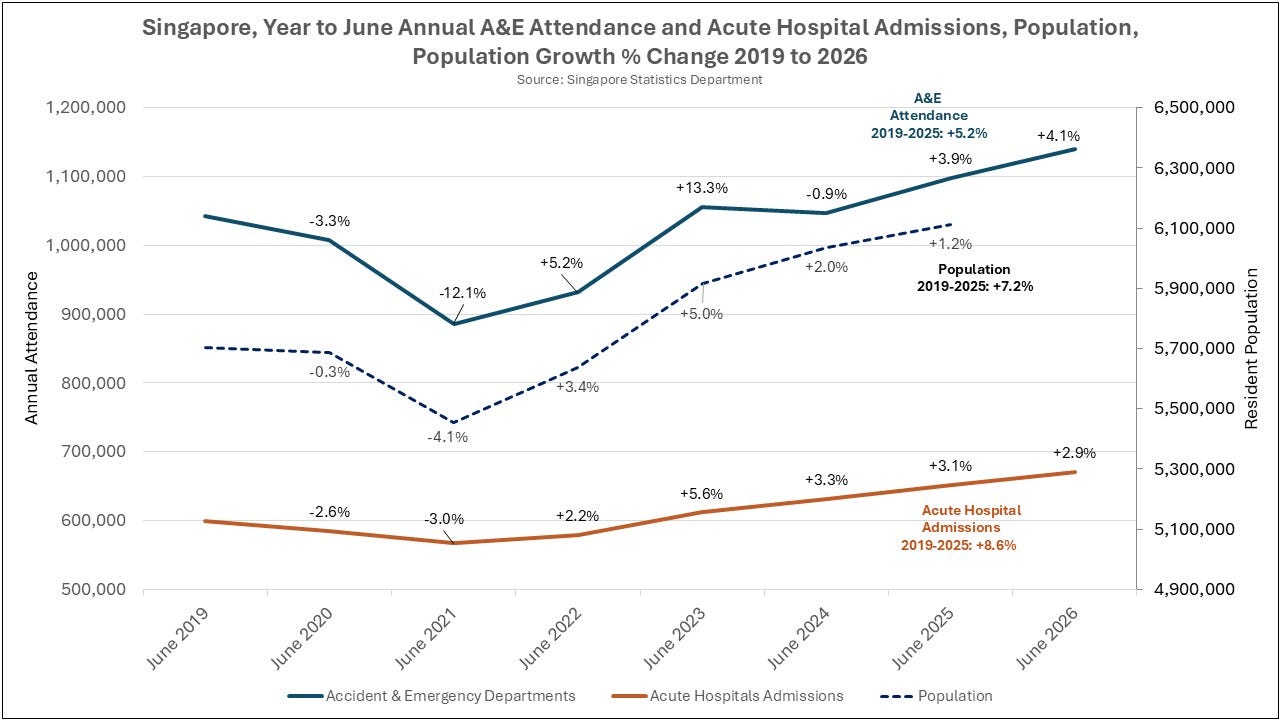
Data on A&E department attendance and Acute hospital admissions are shown. There was a major dip in access to these services in 2020 and early 2021 under lock down conditions and the accompanying reduced population mobility.
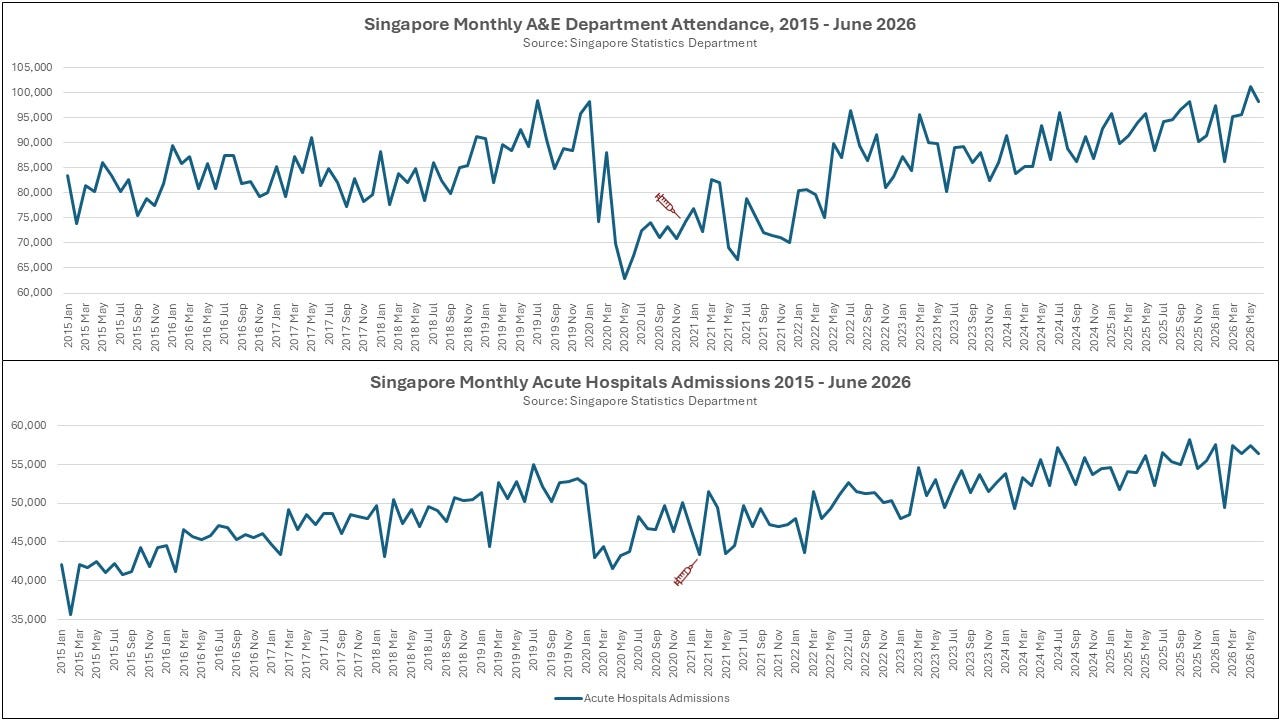
A&E attendance increased by 5.2% between 2019 and 2024, below population % increase), and Acute hospital admissions were slightly above at 8.5%.
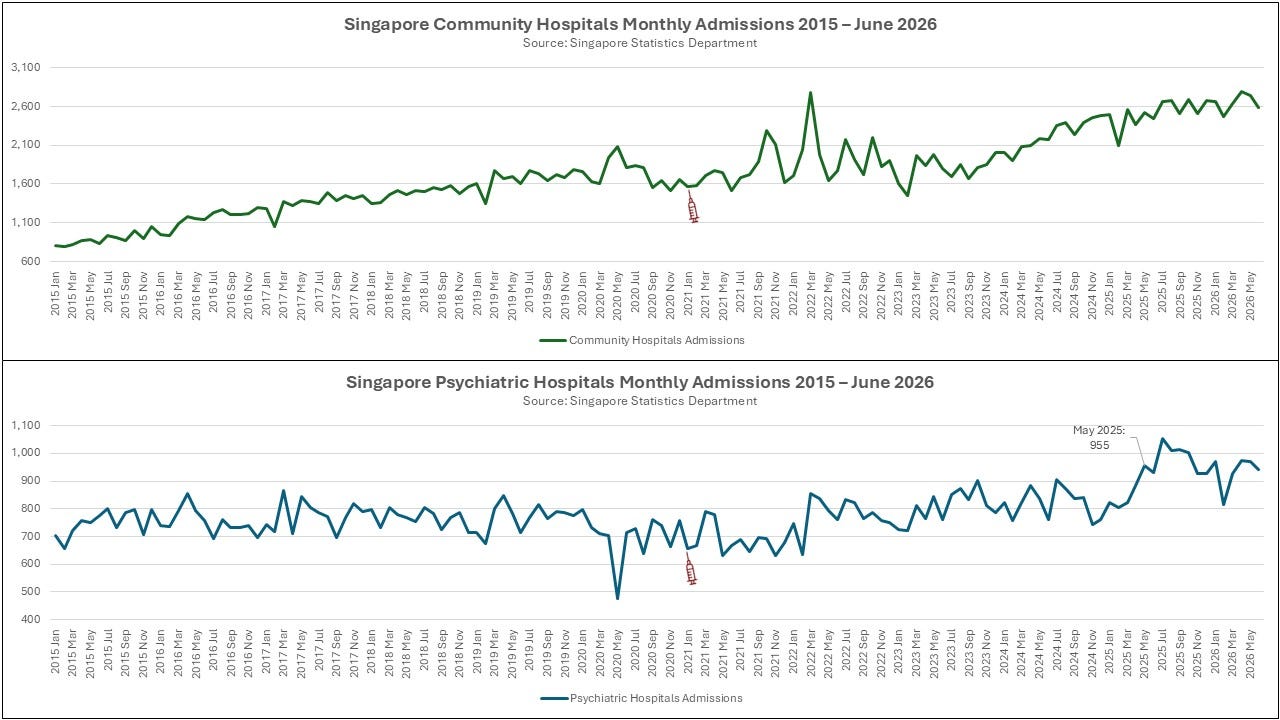
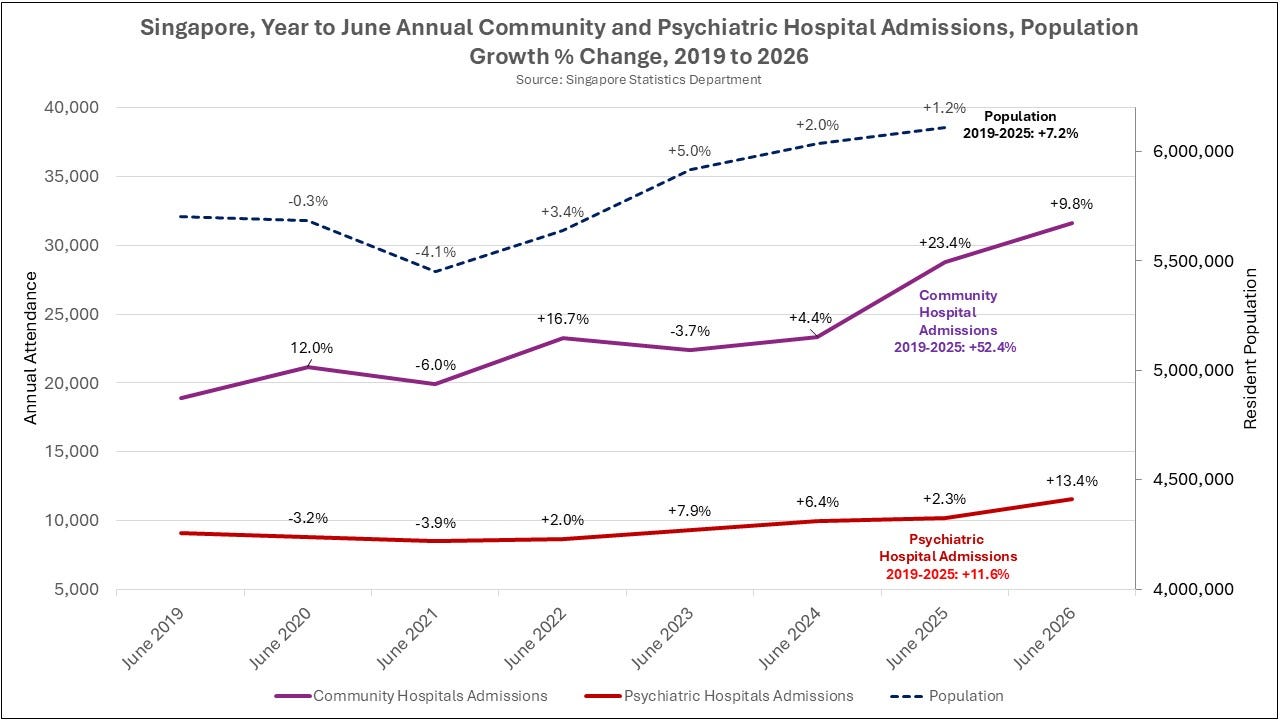
Community hospital and psychiatric hospital admissions are shown. There was a sharp jump in psychiatric hospital admissions from May 2025. This begs the question on why Singaporean mental health is suddently sharply declining.
Community hospital admissions increased by 52.4% and psychiatric hospital admissions increase by 11.6% between 2019 and 2025. The 13.4% increase in psychiatric hospital admissions between 2025 and 2025 represent a major deterioration in population psychiatric between July 2025 and June 2026.
Infant Deaths and Fertility Parameters
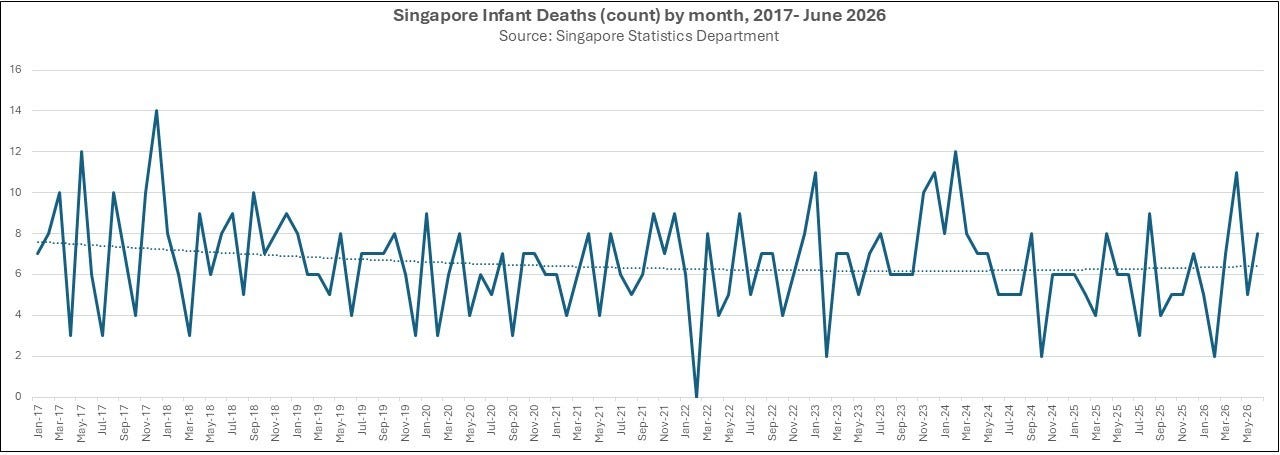
Despite falling births, infant deaths are not falling, indicating probably worsening of maternal/infant health. Infant mortality rates will be available once 2025 annual data is released.
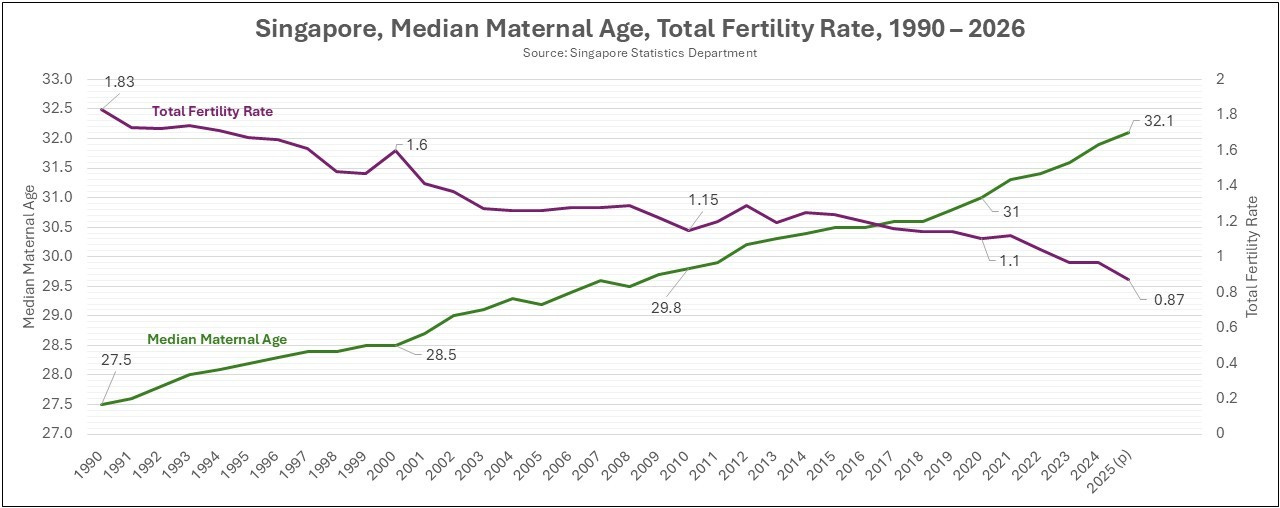
Median maternal age is rising (32.1 in 2026) and Fertility is falling (0.87 in 2025). Aging population and rising age of first childbirth are key factors in birthrate decline.
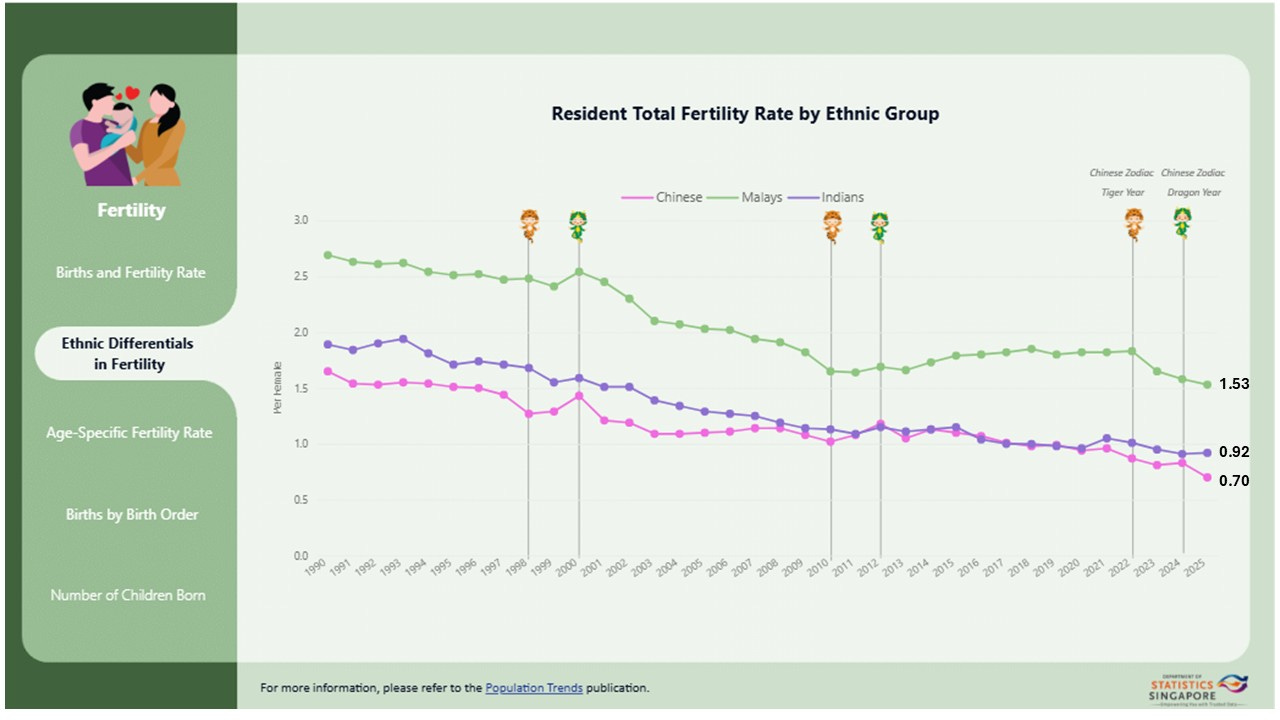
Chinese Singaporeans have the lowest current fertility rates at only 0.70, followed by Indian Singaporeans at 0.92 and Malay Singaporeans at 1.53.
COVID-19 Vaccination
By mid-2023, 93% of Singaporeans had received primary series COVID-19 vaccines and 84% had received booster doses.
COVID-19 vaccination continues to be offered in Singapore for at risk populations.

Current vaccines on offer for infants (6 months to 11 years) expired last 14 August 2026. Vaccines for children aged 5-11 will expire at the end of September. As of publication there is no information on whether offer will resume / supply of new stock.

Singapore’s decline is a microcosm of global trending. They bear close watching. Migration is only going to work while there are available migrants. With the same patterns of plummeting births and rising deaths, the competition for migrants will increase and this will likely only be a short-term solution. In time migrant adopt their new country’s culture and the pressures against families and children continue.
Thank you Super Sally. This is very troubling. The graph showing the trends in births and deaths especially. Those lines should never meet.
.
Thanks for all you do.
Thank you for your thorough analysis Sally.
Many post vax injuries have no diagnostic test. They cannot be understood for what they are as research funding to look into this category of injury will not be forthcoming from the government -(which is also the perpetrator.)
They get classed as psychosomatic. So we will see a massive increase in false mental health diagnoses.
Will the migrants be able to compensate for the loss of skilled workers I wonder?
And what about the loss of workers to the countries they have left?
Laurence Wong must be engaging in a bit of theatre. He must know why fertility has sharply declined. If women are now infertile, offering financial incentives will not achieve much.