

Updated Pandemic Years Response Summary and Vital Statistics: Global Summary from OWID; Vital Statistics Data for Australia, Hong Kong, Japan, Macau, Malaysia, Philippines, Singapore, Taiwan.
This pinned post will be update with each new release of data for the countries whose population outcomes on 22 June '25.

Please refer to whichever countries you are interested in. They are presented in alphabetical order. I will continue updating and refining this summary information over time particularly to update vaccine delivery information and birth and mortality data. If readers have any specific information they would like shown, please provide a message and I will respond. You may also search this substack for by country articles.
1. Global Population Trending
Our World in Data provides estimates of global population growth, birth and deaths, up to 2023. Take this data with a grain of salt, as their population data can be quite different from that reported by individual country’s statistics authorities. From my comparison between OWID and each Government’s Official statistics, OWID overestimates current population for the Philippines, Macau, and Malaysia, underestimates for Australia and Hong Kong, and is on Target for Singapore.
OWID data shows consistently dropping global births and rising deaths. Regardless, global population will continue to grow for so long as births outnumber deaths.
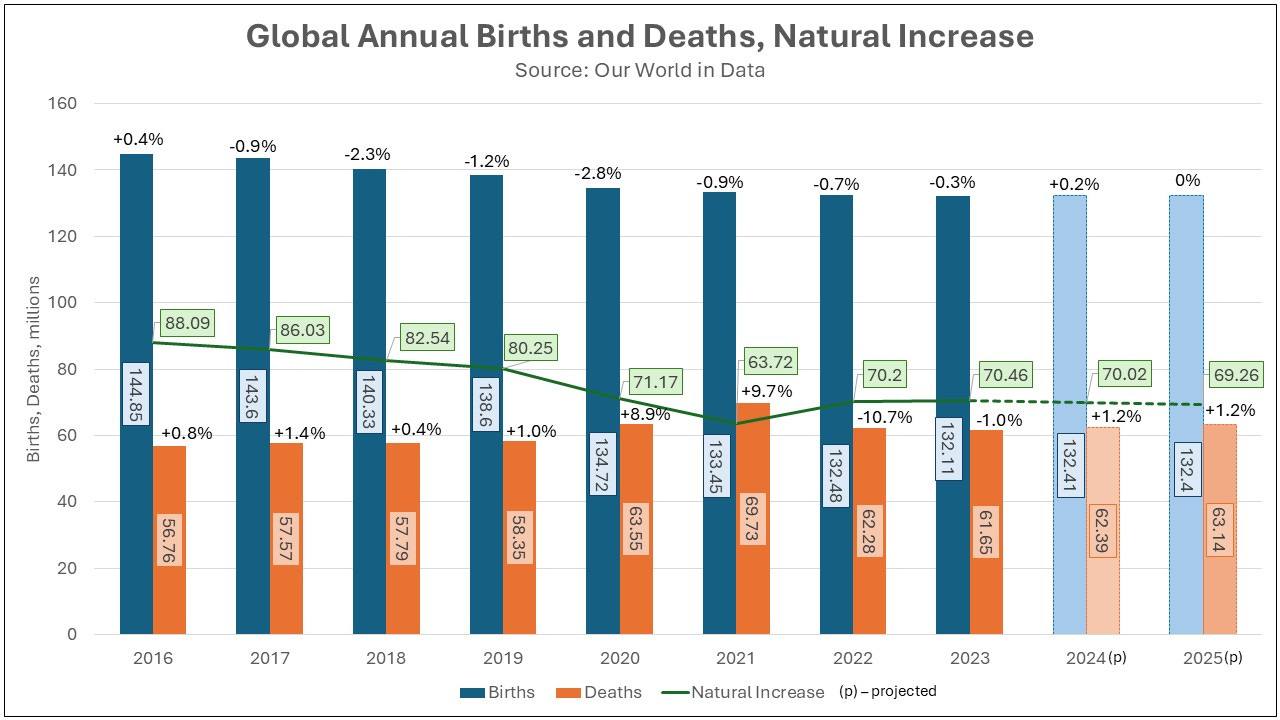
OWID reports global births as 132.11 million in 2023 down from 132.48 million in 2022, with both years well down from the 138.6 million births reported in 2019, the last pre-pandemic year.

OWID reported 61.65 million deaths in 2023 down from 62.28 million in 2022, but well above the 58.35 reported in 2019, the last pre-pandemic year. Global deaths show a clear step change in 2022 and 2023 post the massive death spike that accompanied the Covid-19 health intervention rollouts in 2021. Deaths are projected to rise further in 2024 and 2025.

Given the setting of rising deaths and falling births across Asia, I have accessed and plotted data by country for Australia, Hong Kong, Japan, Macau, Malaysia, Philippines, Singapore, and Taiwan. All data is taken from statistics authorities in the relevant countries.
2. Australia - Estimated 61,847 Excess Deaths from 2020 to September 2024, Elderly Australians Decimated
Australia’s population was 27,204,809 at 30 June 2024.
Australia’s COVID-19 vaccine rollout was launched on 22 February 2021 with the provision of Pfizer to quarantine and frontline personnel and aged care and disability residents and staff. Distribution of AstraZeneca began on 5th March 2021. By 31 December 2021, all people aged 12 years and above were eligible to receive a COVID-19 vaccine. On 8 November 2021, the Australian Government initiated the vaccine booster program for 3rd doses. From 10 January 2022, the Australian Government expanded eligibility for the program to include those aged five to 11 years. Around 78.4% of the population have taken at least 1 dose of Covid-19 vaccine.

Attagi still recommends Covid-19 vaccination for at-risk children from 6 months of age. This information is current as of 22 November 2024.

The most updated mortality data for Australia was released on 28 February, covering Australian provisional mortality from January to November 2024.
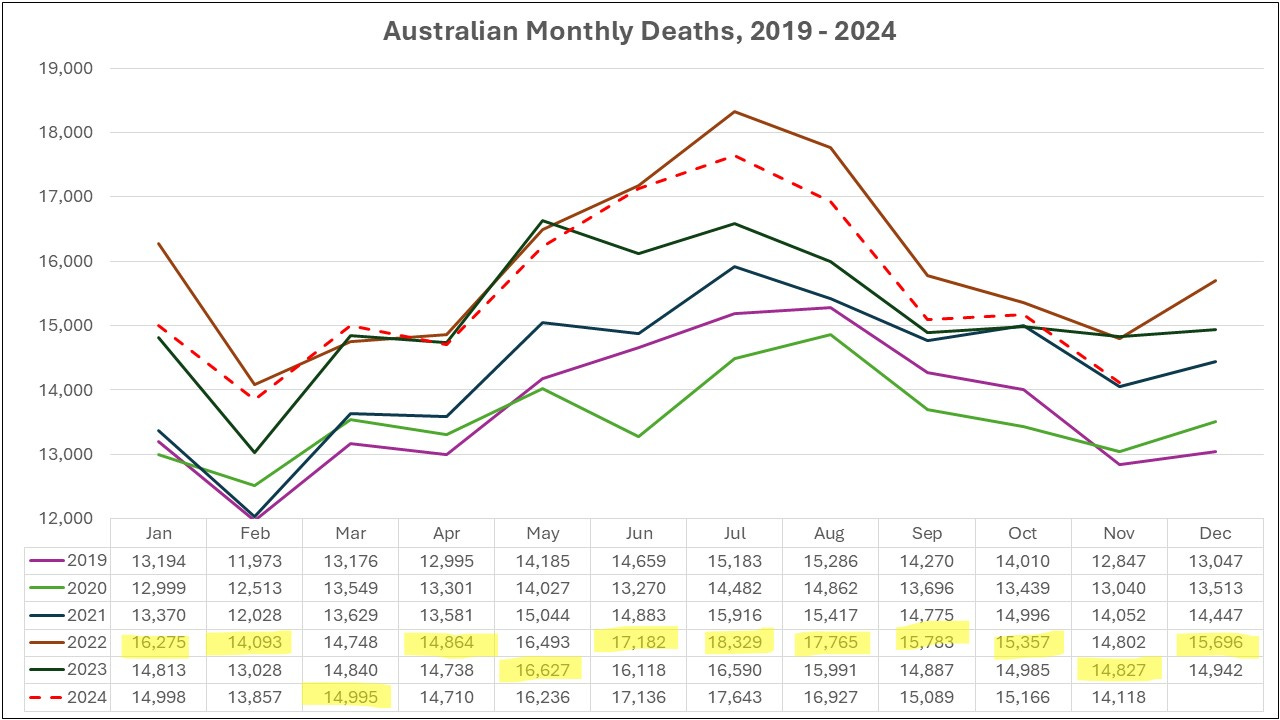
Deaths in 2024 are lower than 2022 and higher than 2023. No earlier year / pre-pandemic comparisons are provided. Perhaps to ensure short memories about what mortality was like prior to the called Covid-19 pandemic.

With each release a few more deaths are added to each month, and the final monthly deaths end up 200 - 300 higher than the first release. Accumulating data is plotted showing first report and latest report

Referring to 2015 - 2019 patterns I forecast expected changes in mortality up to 2025. To January 2025, there are 67,188 more deaths than would be expected based on pre-pandemic patterns. Deaths in February 2025 finally fall below expected levels, and excess deaths have dropped to 66,555.
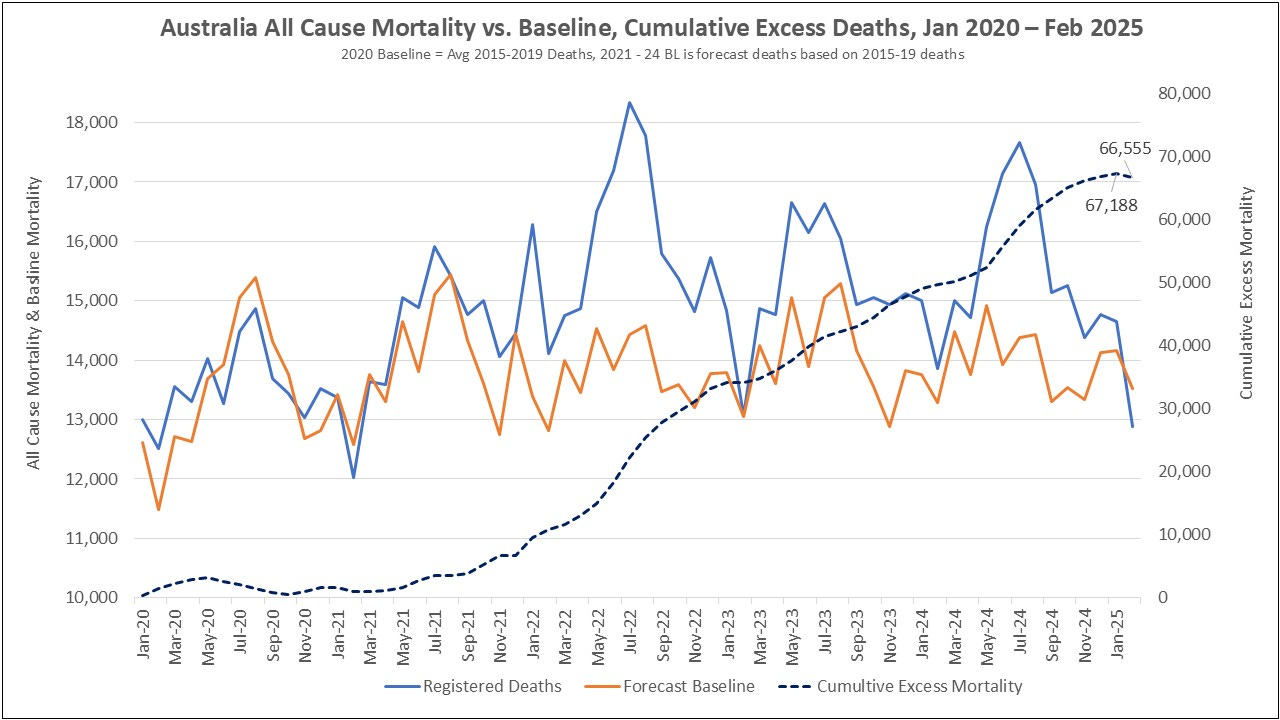
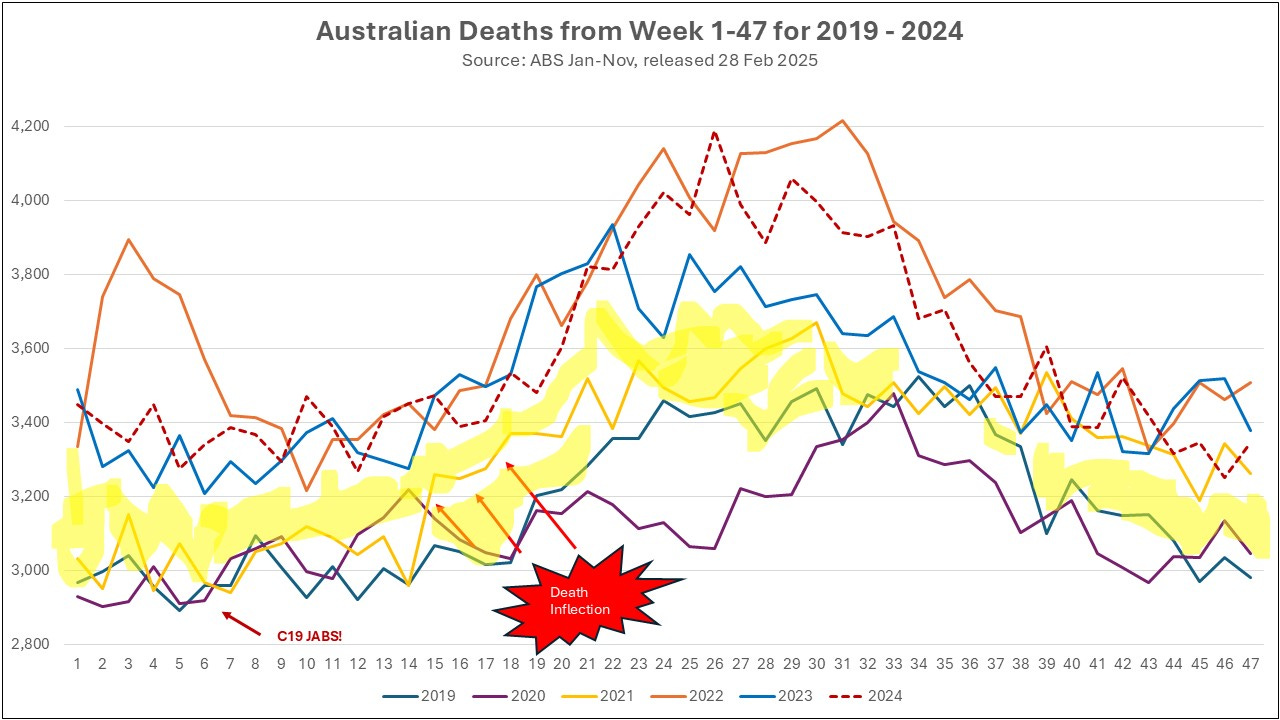
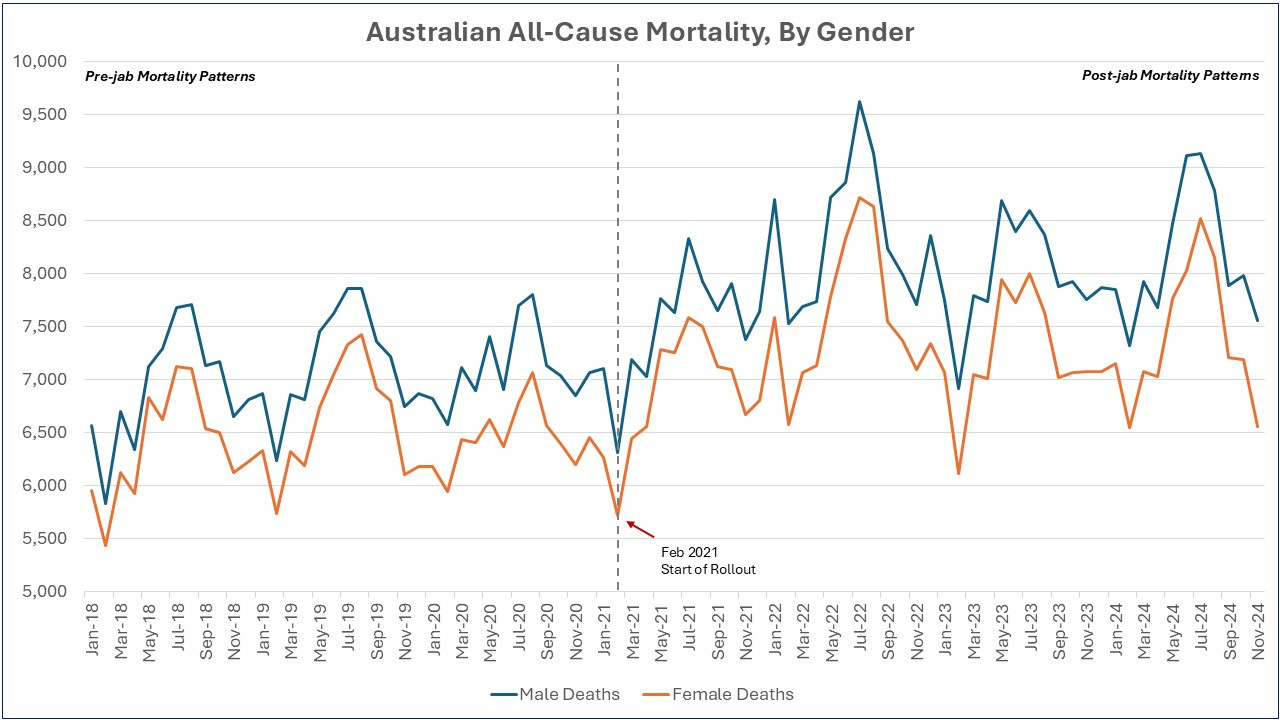
The change in mortality patterns with vaccine rollout is abundantly clear. Deaths exhibited a step change within 2 months following start of rollout and have not returned to prior baseline.
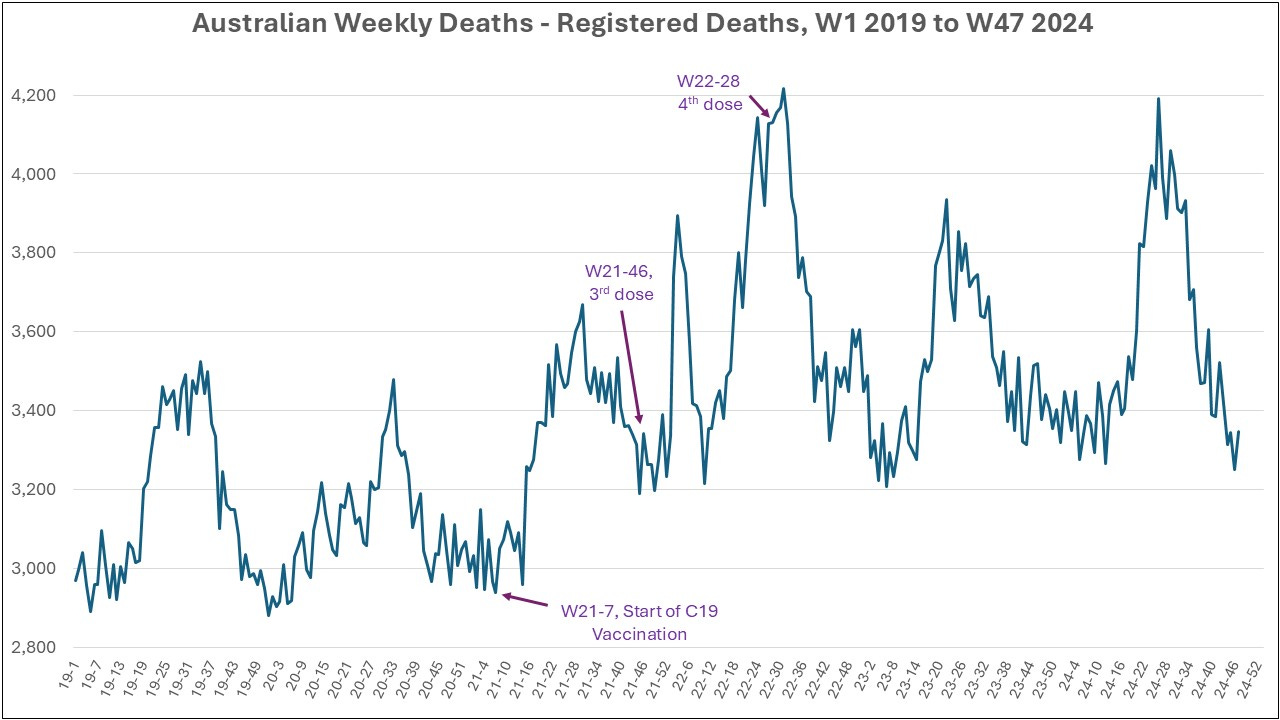
There were no excess deaths in 2020, despite lockdowns and declared Covid-19. I plotted pre and post jab years on the same scale to make this trending clear.
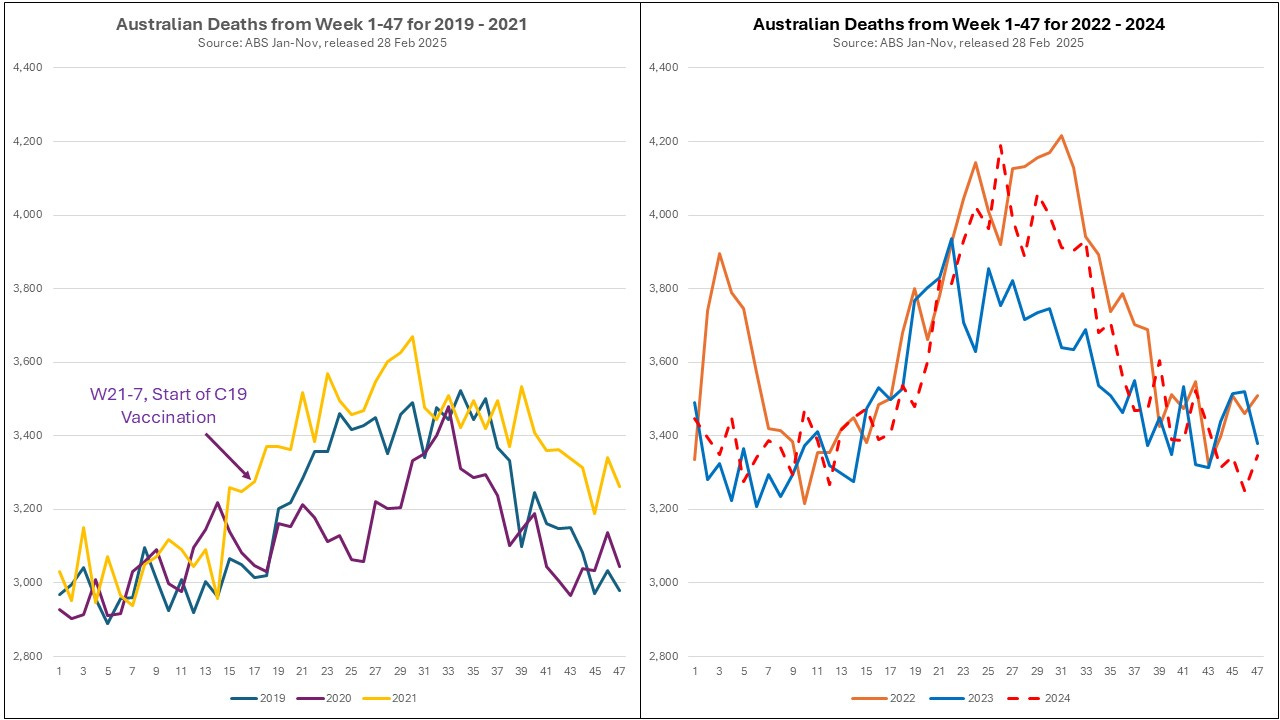
The inflection started a few weeks after a slow rollout in February 2021. Yellow highlights the vaccine-induced (there is no other rational explanation) separation of deaths.
Annual deaths by month. 2024 deaths are not reassuring when looked at compared to prepandemic patterns.
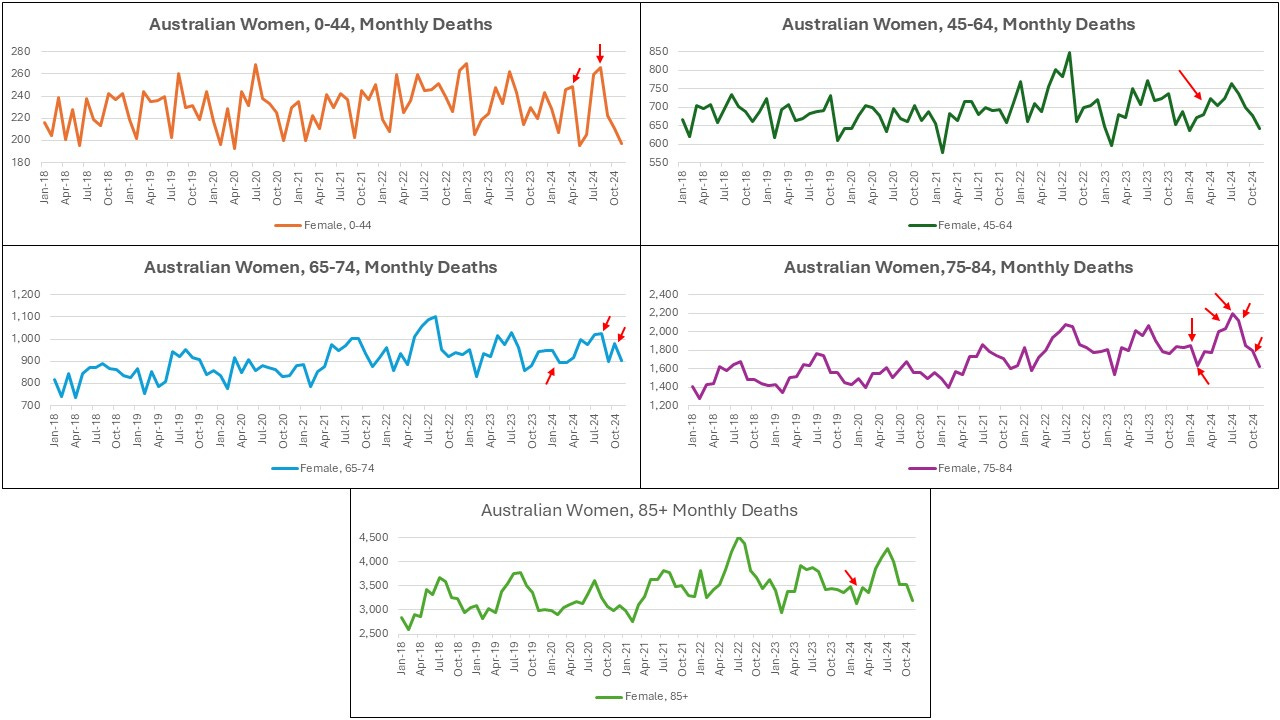
Mortality patterns by gender also show a clear inflection in February 2024.
Somewhat reassuringly, deaths in younger folk have dropped in 2024. However, the deaths in the 75 to 84 are showing new records for 2024, worse in women than men, reflecting shorted duration of life, and there must be many more folk with much poorer health. Red arrows on the 2024 months indicate that the relevant month has the highest deaths on record.
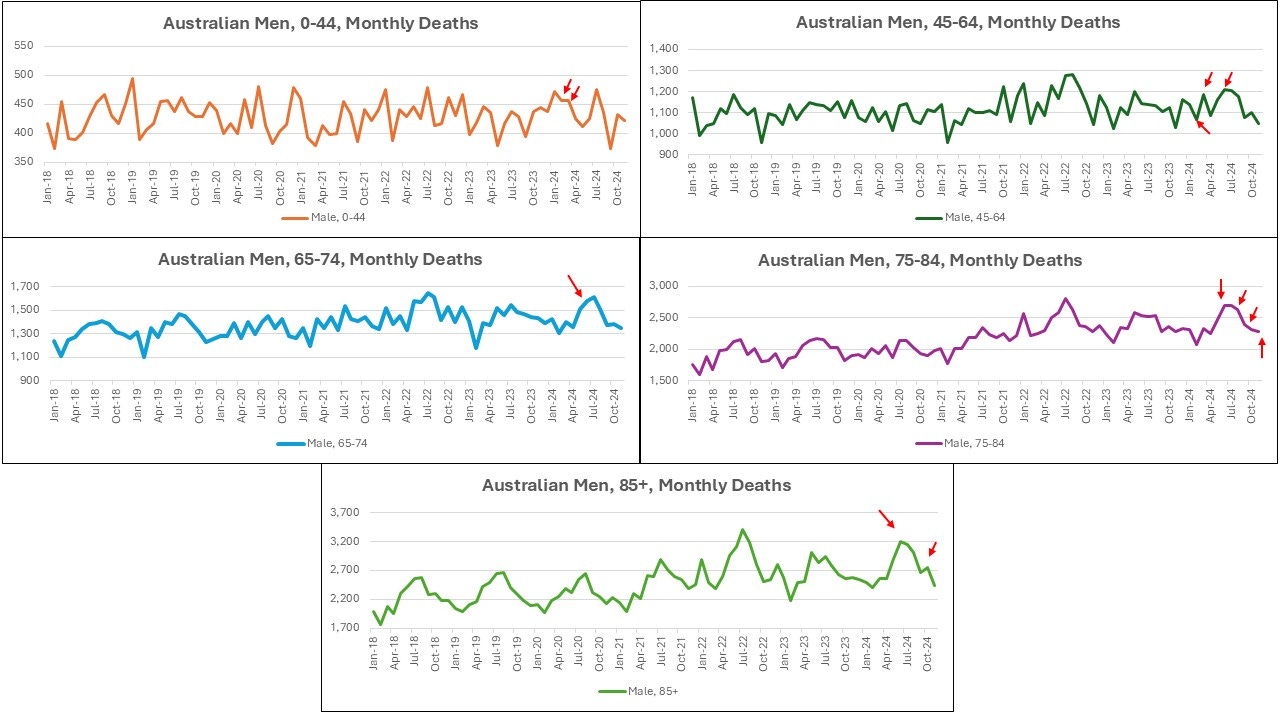
Older Australian women aged 75-84 have done worse than Australian men. Loss of these women with their experience and support is a terrible loss to Australian society.
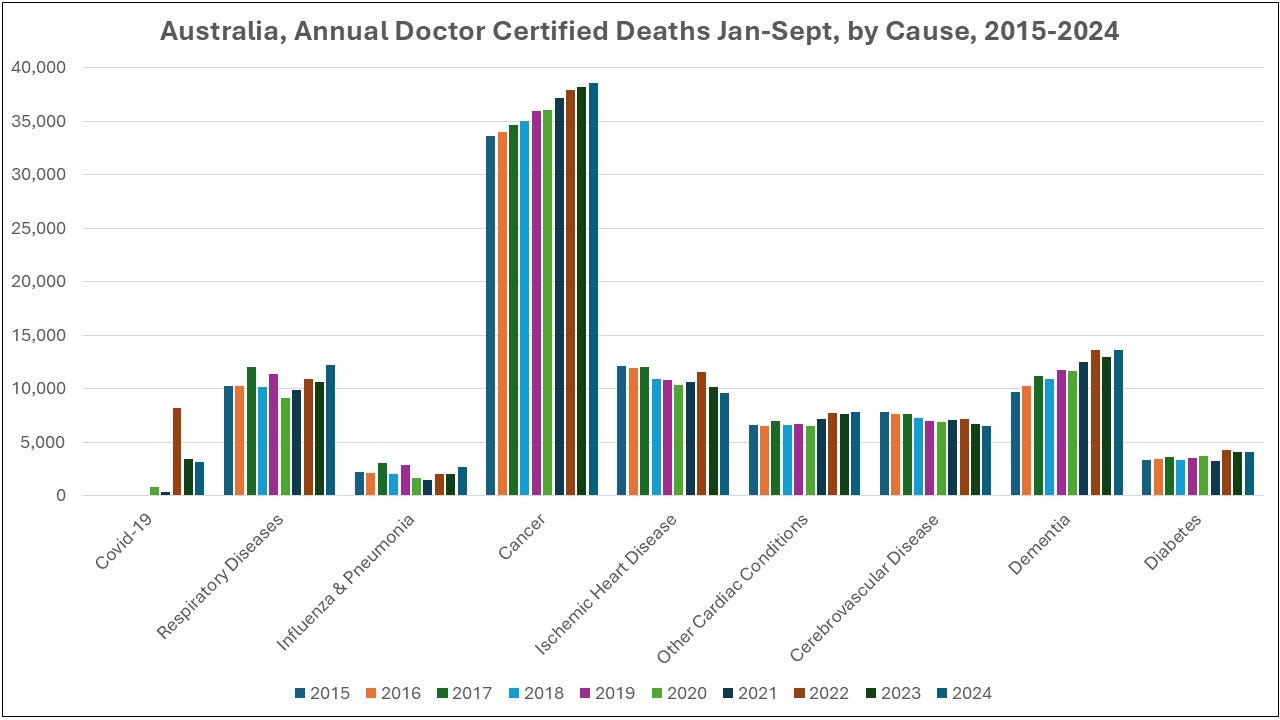
Provisional Cause of Death data for January - September 2024 shows particularly rising deaths due to cancer (31.2% of all Dr certified deaths), respiratory diseases (9.8%), other cardiac disease (6.3%), and dementia (11%). Ischemic heart disease (7.7%), Cerebrovascular Disease (5.3%), and Diabetes (3.3%) appear to be dropping slightly / are stable. This drop may well be deceptive as one or more of these conditions could well have been underlying health confounders even when the primary listed cause of death was cancer.
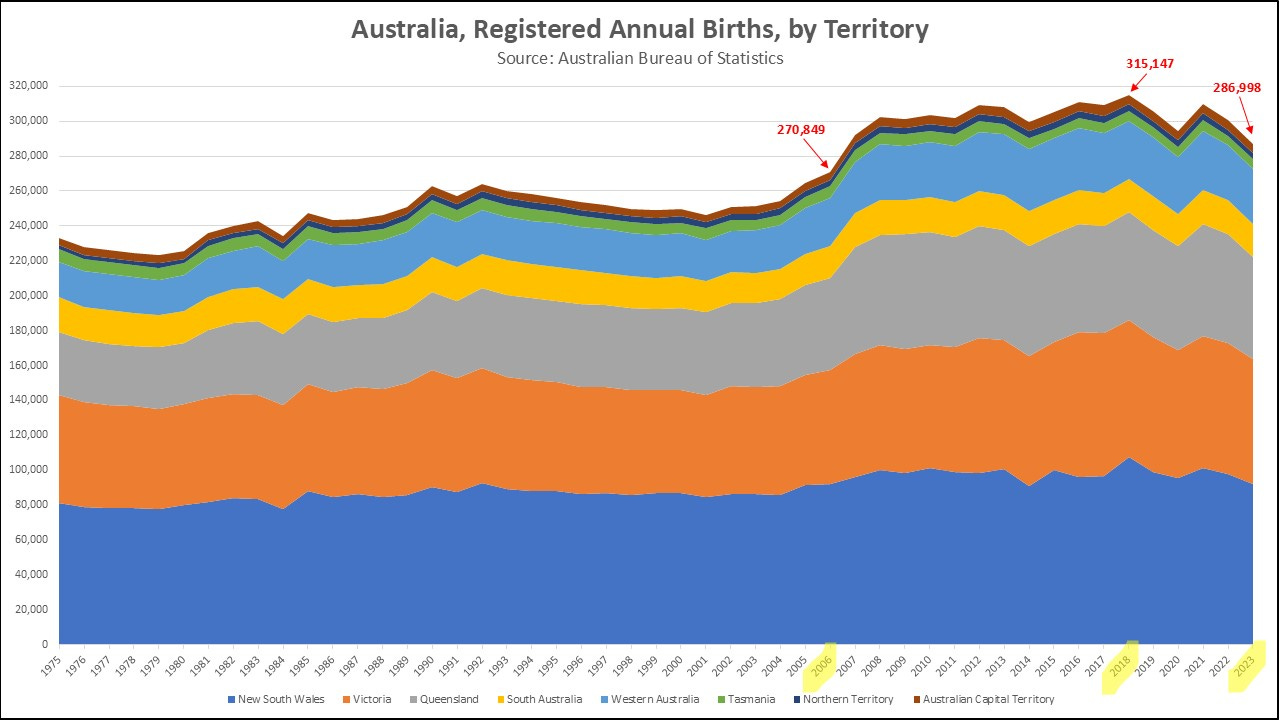
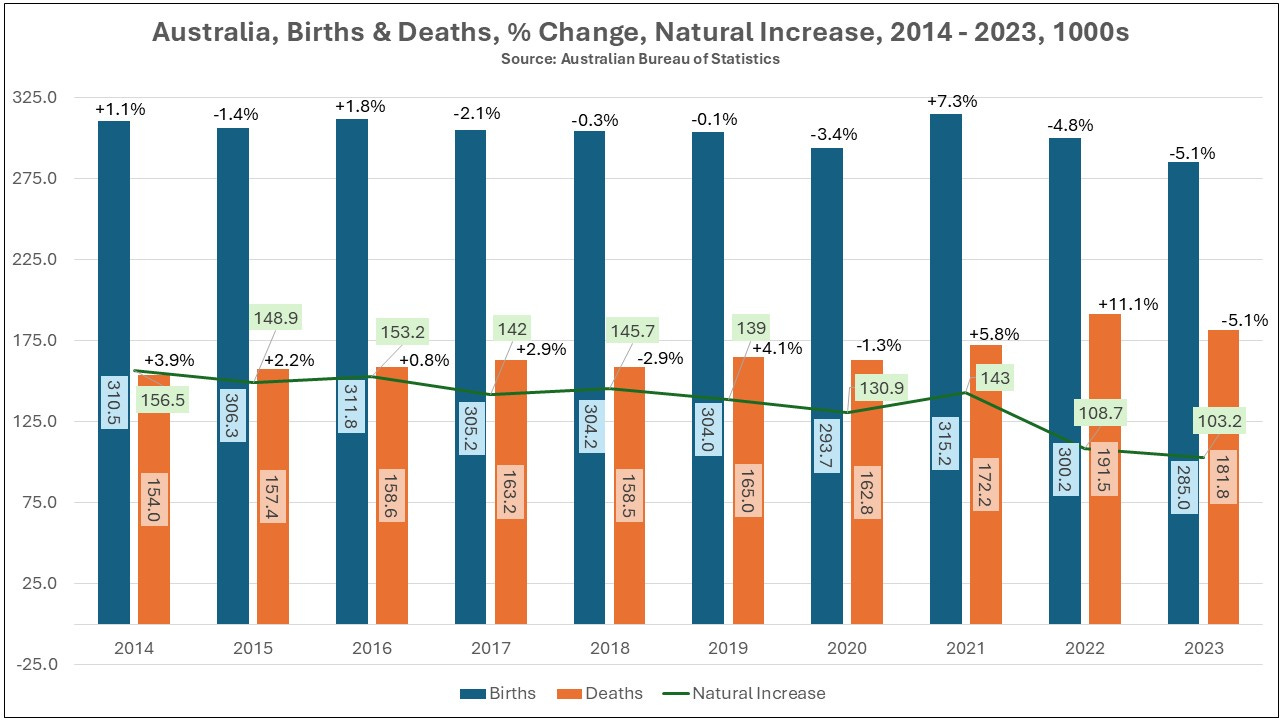
Natural population increase in Australia is declining with rising deaths and falling births despite an ongoing and an aggressive inward immigration policy which has seen a net gain of 445,640 people to the Australian population in 2023-24 and 1,184,750 people since 2021. Births by Australian Territory are set out.
Natural population growth will drop below 100,000 in 2024 if current trending continues.
3. Hong Kong Has Natural Population Contraction since 2020 When Deaths First Exceeded Births
All data presented is from the Hong Kong statistics department and extracted from published public domain reports.
Hong Kong had an end of 2024 estimated population of 7.53 million persons, which increased by 0.1% compared to the prior year. Population growth is due to inward migration, as births are too low to contribute to growth.
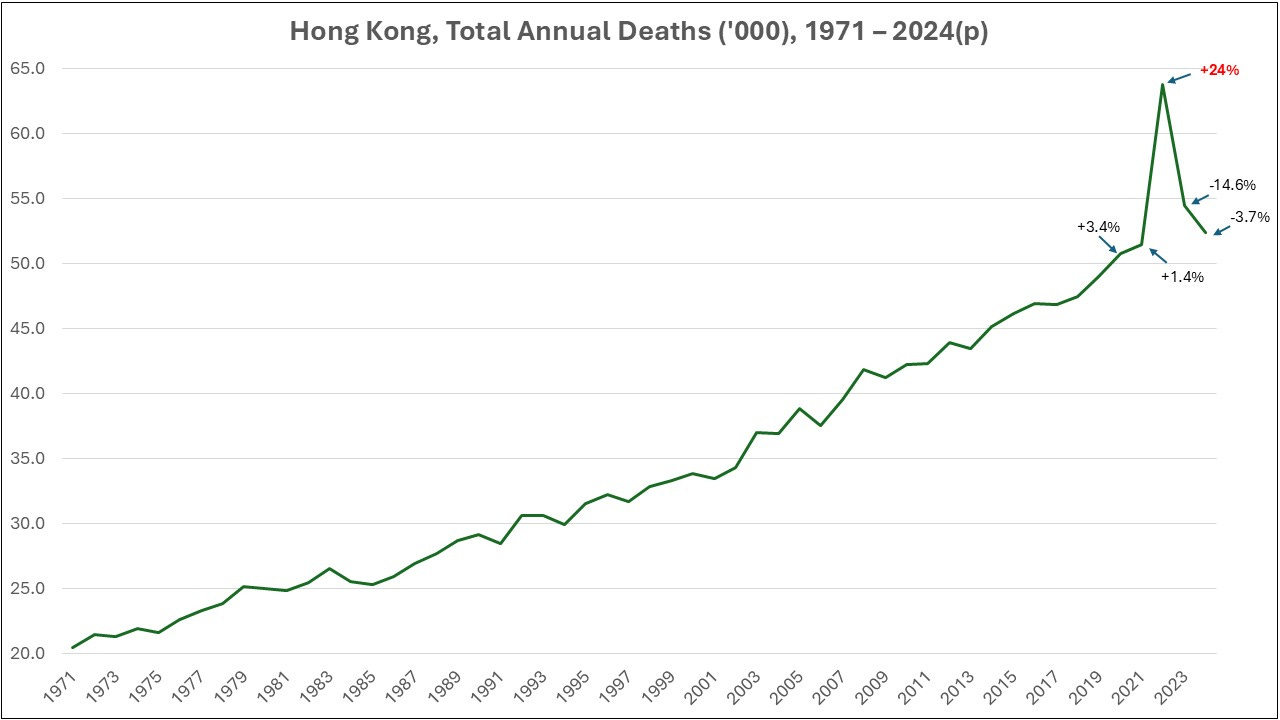
Hong Kong has an aging population. This is reflected in rising deaths and falling births over time. Annual births and deaths from 1971 to 2024 are plotted. Deaths show a steady rise. 2022 shows a massive 24% increase in deaths. There is some recovery in 2023 and 2024, but not to prior levels.
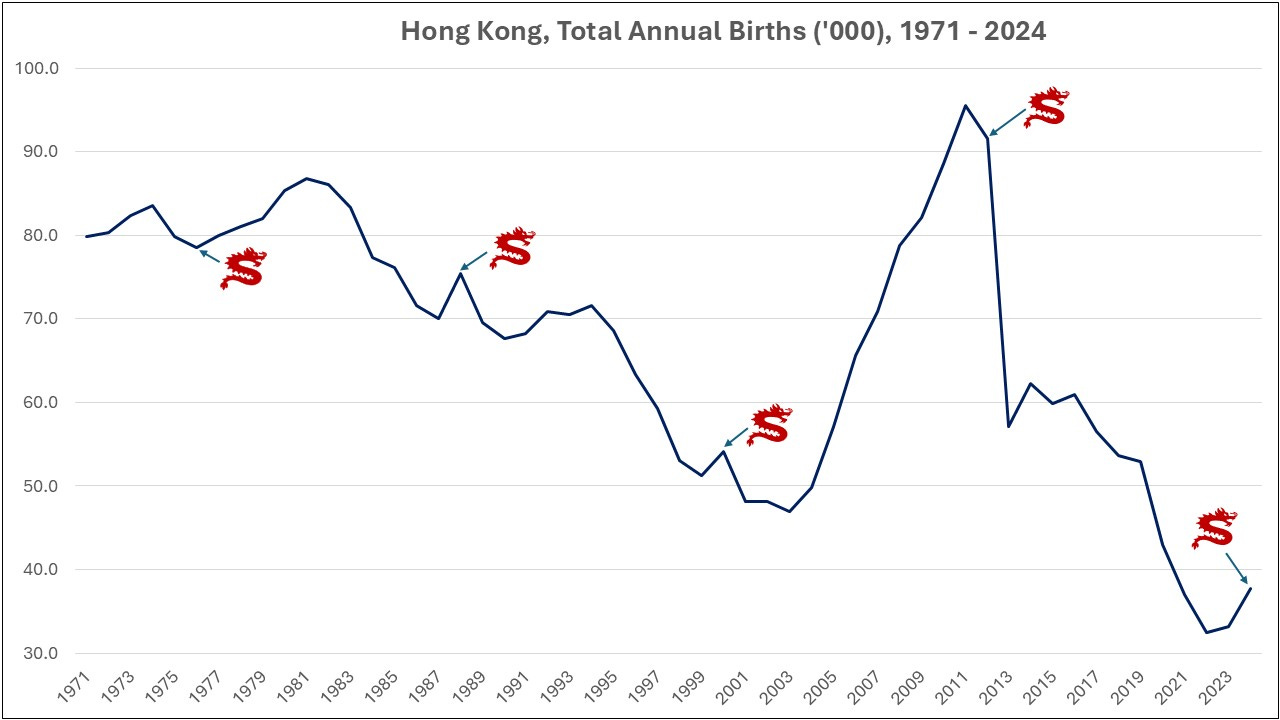
Hong Births have been declining over time. Even the historical births spikes every 12 years for Dragon Year births are declining with 2024 having lowest dragon births on record. Hong’s births are highly volatile reflecting changing confidence in the local political situation; 1997 was a low birth period as residents watched outcomes of the handover to China. This was followed by some 10 baby boom years before a new steady decline.
Covid-19 Vaccination in Hong Kong
Hong Kong implemented very strict lockdowns over Covid-19. Two Covid-19 vaccine products were used: CoronaVac (Sinovac - whole inactivated virus) vaccine which started on 26 February 2021, and Comirnaty (BioNTech - mRNA product) vaccine which started on 10 March 2021.

93.8% of the population has completed Covid-19 vaccination.

Children and working adults have very high coverage, with 12 to 49 yo having > 100% coverage; the > 100% is due to non-resident uptake.

CoronaVac was phased out by the end of September 2024, and only the mRNA product Comirnaty is still available. Upon my last checking, Hong Kong was offering a 9th dose of mRNA to any willing persons. Pfizer has been added to the pediatric schedule for babies 6 months and older.
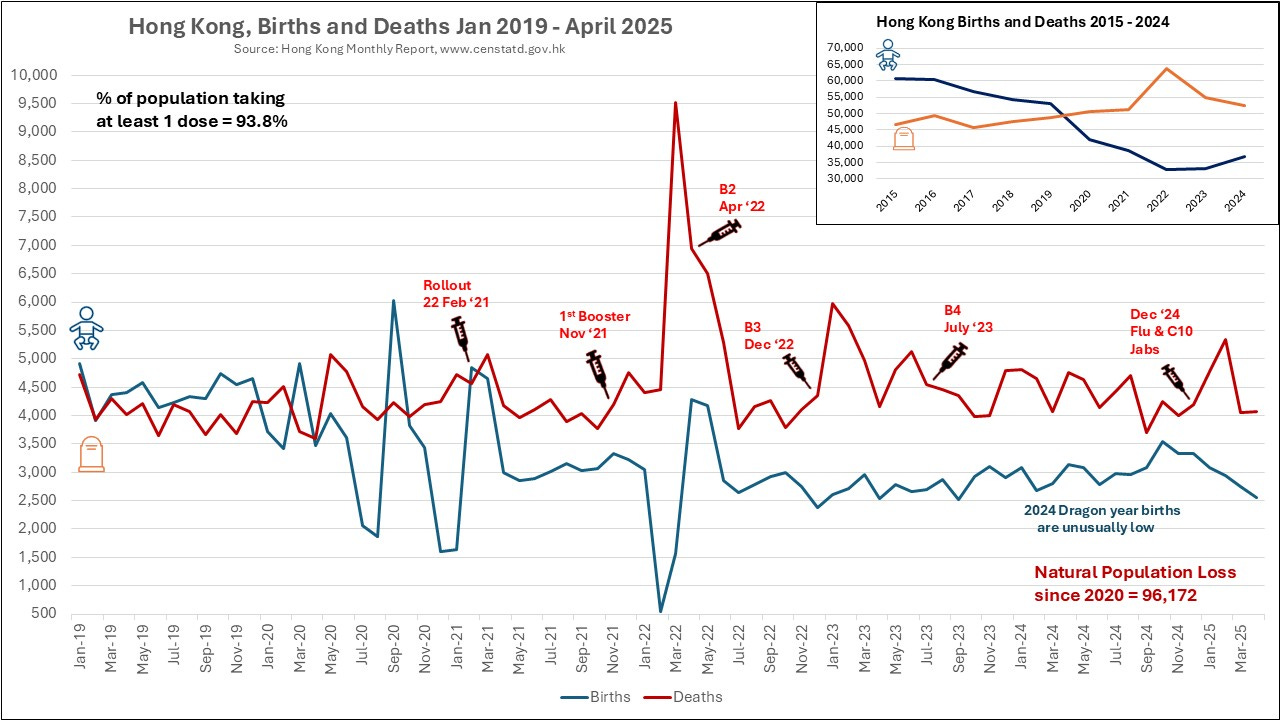
Hong Kong’s population has experienced negative natural increase since 2020, the first year of the pandemic, and there have been 89,380 more deaths than births since that year.

Population trending since 2019, the last pre-pandemic year is set out for reference. The big spike in deaths and drop in births in 2022 particularly matched timing of bivalent boosters.
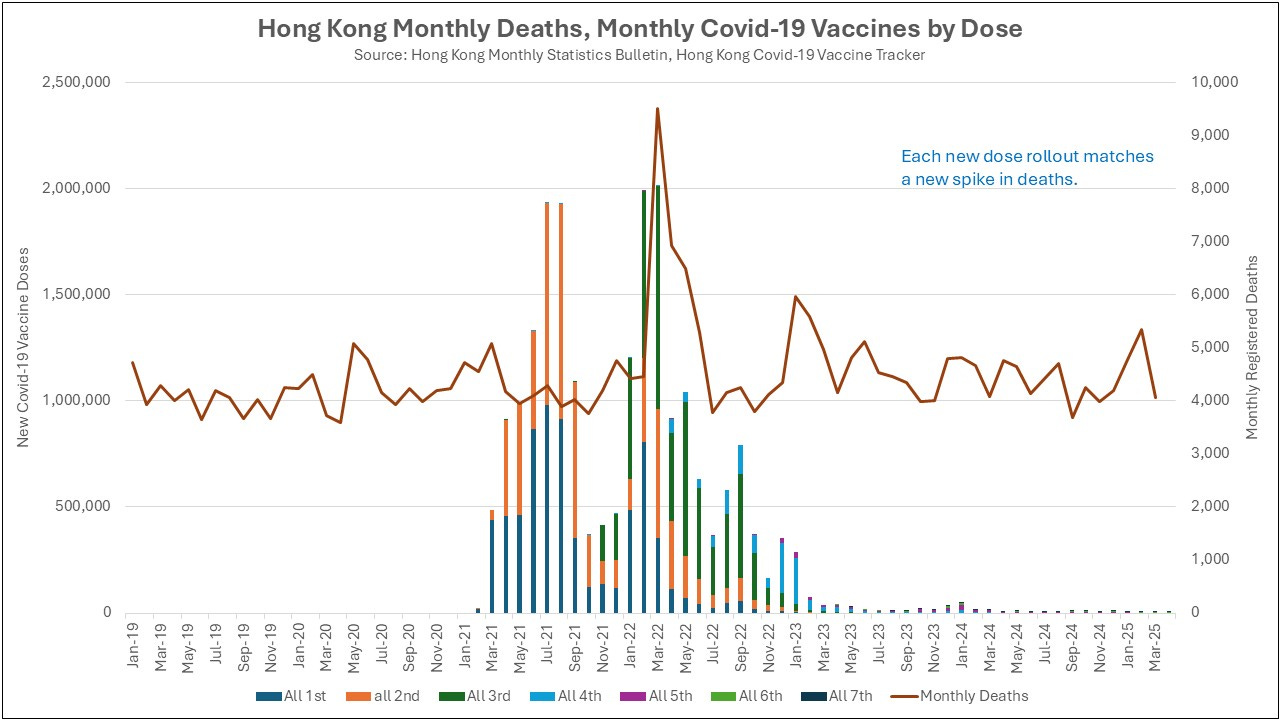
I have previously explained that the spikes in deaths from 2022 onwards matched each new rollout of additional Covid-19 product boosters. I sent this information to the Hong Kong Department of Health and doctors listed in the Pharmacovigilance reports but was brushed off.
Evaluation of Hong Kong C-19 Vaccination and Vital Statistics. Pharmacovigilance Reporting Concluded Unequivocable Safety and Efficacy of the Covid-19 Vaccines, with 21 Million Doses Administered.
Hong Kong births and deaths to April 2025. Births are dropping and deaths are rising.
Spikes in deaths in Hong Kong are somehow linked with Covid-19 Vaccination doses. Overall pattern shown and breakdown to show new doses and death rises.
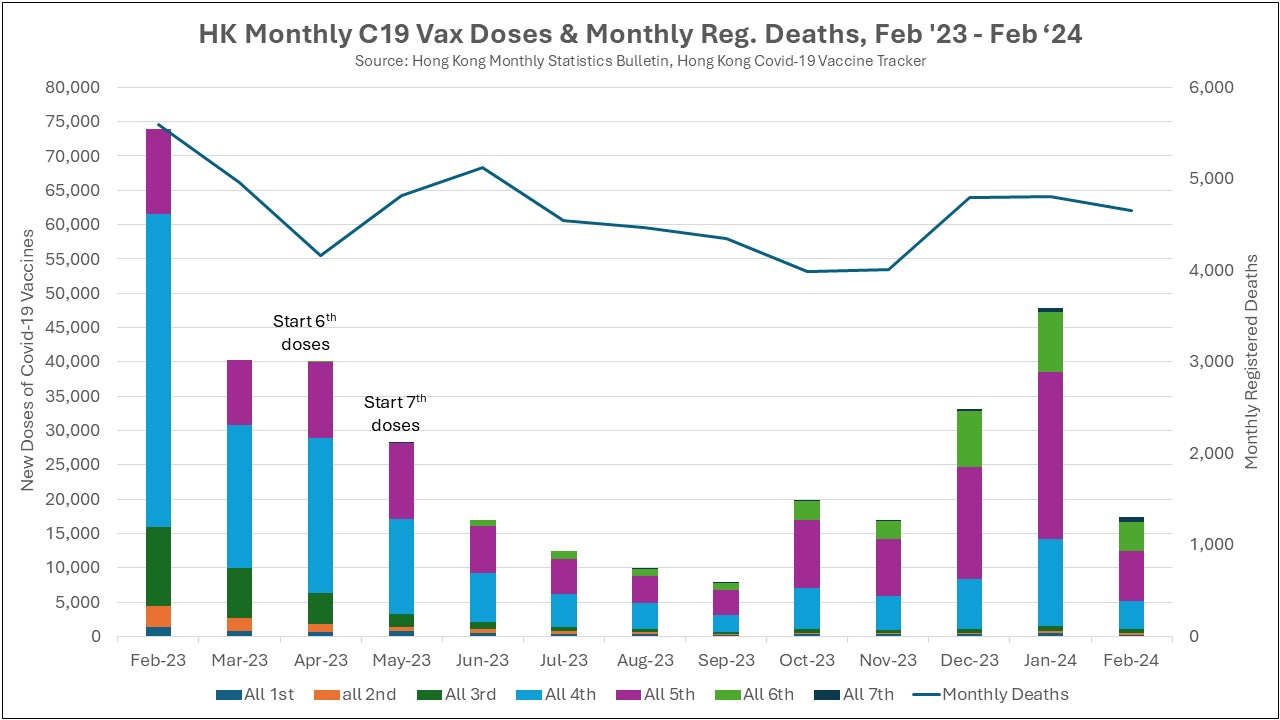
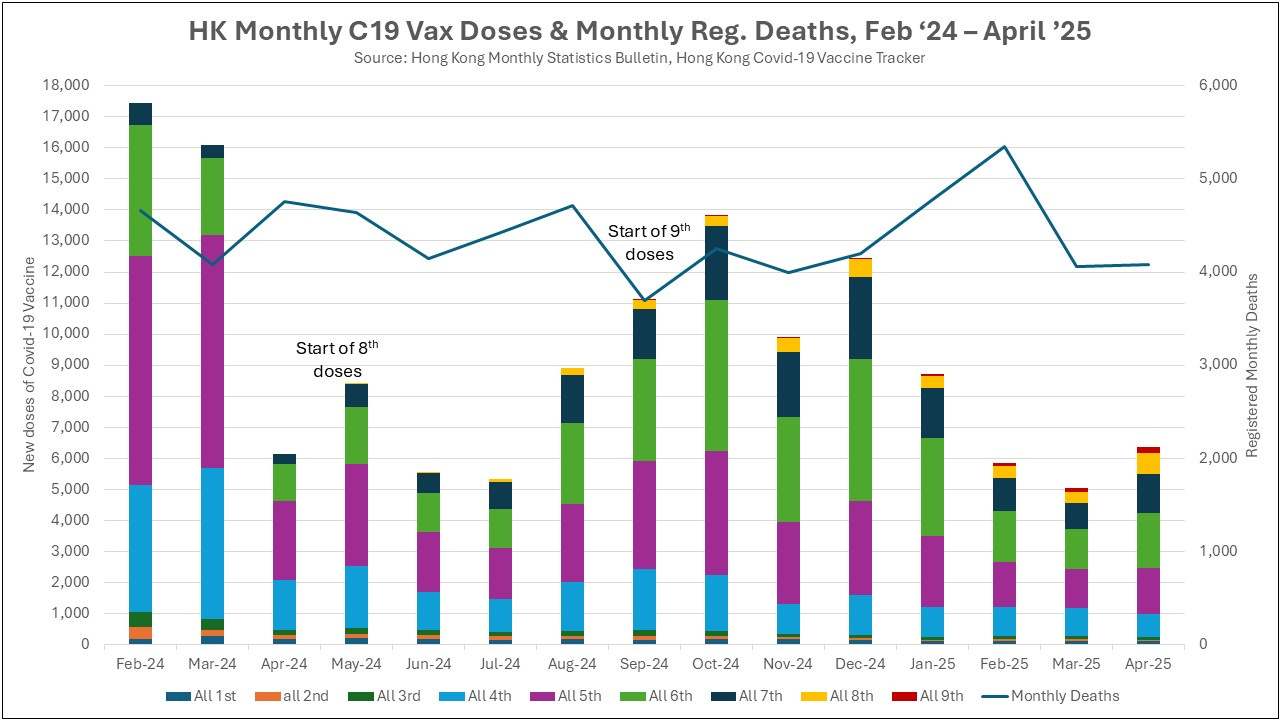
4. Japan Has Had Declining Population since 2005. Population Decline particularly accelerated in 2022, Concurrent with the Second Year of the Covid-19 Vaccine Delivery and Booster Administration.
Japan’s population was estimated at 124.35 million on 1st October 2023. Japan has lost 5.987 million natural population since 2005, the first year that deaths exceeded births. Since then, births have consistently declined, and deaths have risen.
Japan started its’ Covid-19 vaccination program in February of 2021. Japan used Pfizer, Moderna, and AstraZeneca products. Some 80% of the population received at least 2 doses, and around 60% has received 1 or more booster doses. Booster dosing is particularly encouraged for senior citizens.
Deaths in 2020, the first year of the pandemic showed an uncharacteristic decline of -0.6%; with no mortality signal reflecting the pandemic! However, 2021 (+4.9%) and 2022 (+9.0%) both had uncharacteristically high jumps in registered deaths.
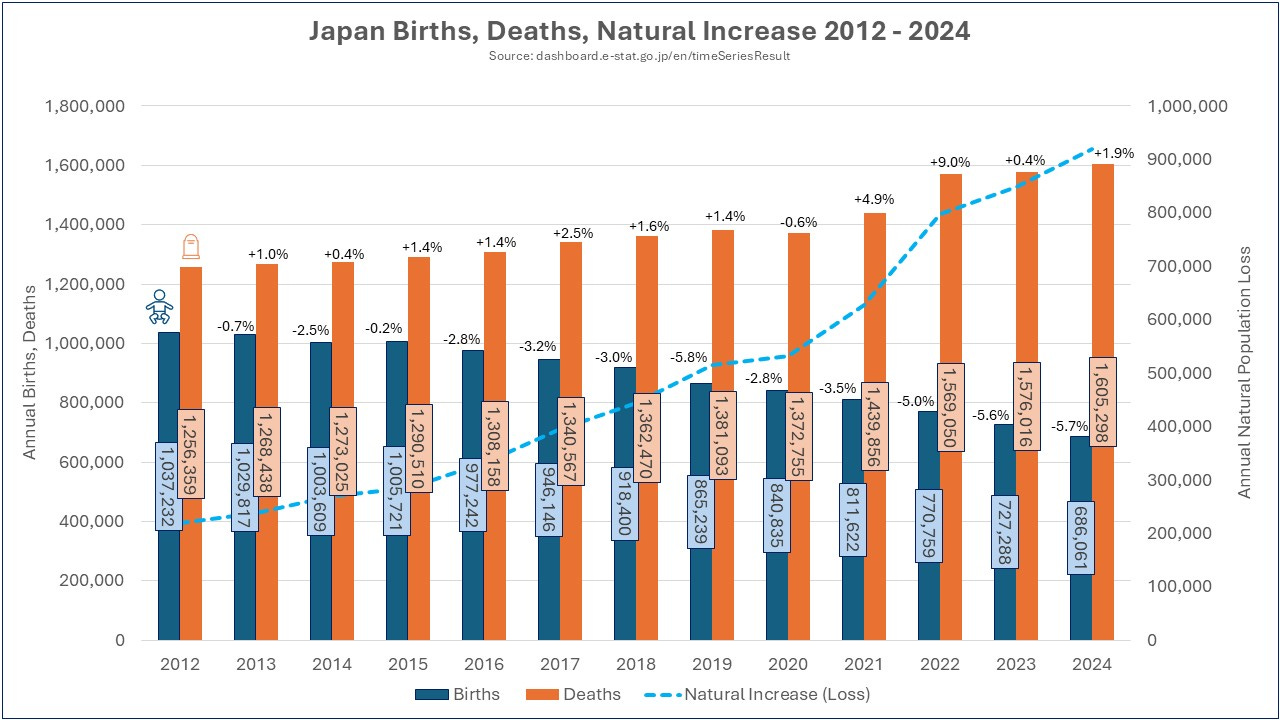
A longer view, showing Japan’s vital statistics and cumulative natural change (births-deaths) from 2000 is set out. Population loss is accelerating.

5. Mortality in Macau Spiked and Deaths Plummeted in 2022, the Second Year of Vaccine Rollout Accelerating Its Trending of Rising Deaths and Falling Births. The Largest Death Spike Was Concurrent with Rollout of Pfizer Bivalent as Booster Dosing in December 2022 / January 2023.
Macau has an estimated population of 687,000 as of mid-2024. In 2023 the published fertility rate was 586 births per 1,000 women, just over 1 child for every 2 women.
Macau has also offered both mRNA Covid-19 and inactivated products; Government Webpage.
Residents are also recommended to get mRNA products for boosters if they took inactivated products for initial doses.

As of 3rd February 2025, 99.9% of Macau’s population has taken at least 1 dose, and 94% have taken more than 1 dose.

Covid-19 vaccines are recommended for babies from 6 months of age.

Macau Population Vital Statistics
Despite 2024 being a dragon year, Macau’s 2024 births fell by 2.8% compared to 2023. However, lower deaths, -17% compared to 2023, meant a small gain in natural population (+1,130) for Macao in 2024.

Monthly births and deaths since 2018 are set out to show historical population changes; monthly births did show some recovery in late 2024 as couples welcomed their dragon baby. Macau is only a few hundred more deaths or fewer births away from natural population contraction; which dire milestone may be expected this year, or next if current trending continues.
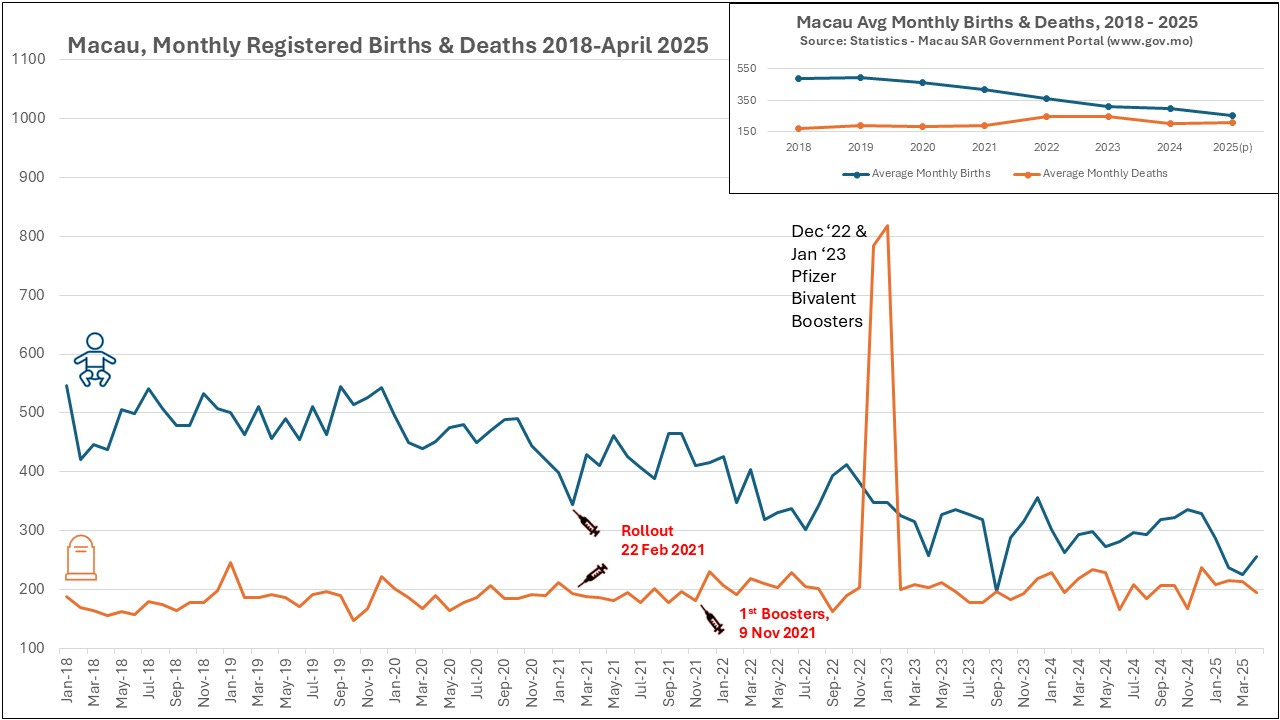
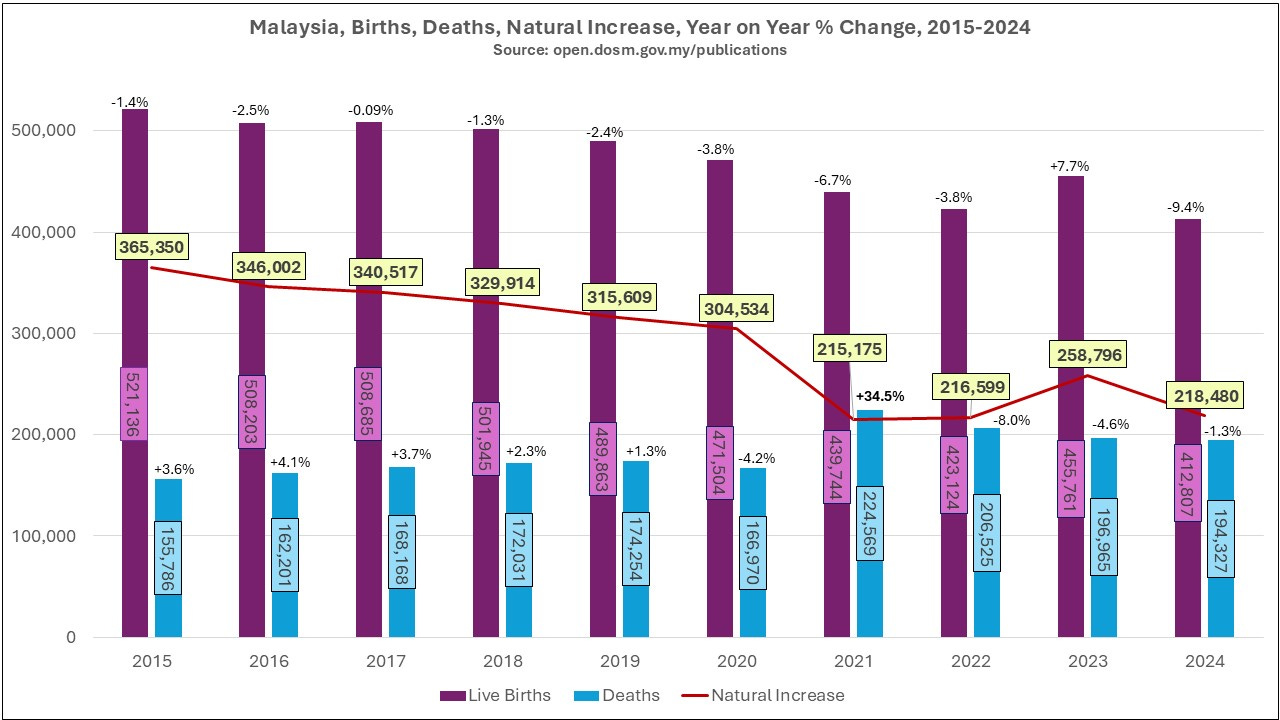
6. Malaysia Births Have Dropped by 40.2% between 2015 and 2024. After NO excess Deaths in 2020, Deaths jumped by 34.5% in 2021 Concurrent with Covid-19 Vaccines Rollout. Deaths Have Not Returned to Pre-Pandemic levels from 2022 to 2024.
Malaysia’s total population in the fourth quarter of 2024 was estimated at 34.2 million.
Malaysia started Covid-19 injection rollout in February 2021. 2023 Pubmed article describes rollouts and prioritization. The government targeted at least 80% of the population to be injected by February 2022. As 22 February 2025, 86.2% of the population had taken a first dose, and 84.4% had completed primary protocols.

Uptake of Covid-19 Vaccines in 2024 is very low.

Deaths in Malaysia rose following start of rollout of covid-19 vaccines. Vaccine doses, births and deaths are set out.

Malaysian Population Statistics
Malaysian births have been dropping steadily over time, with the drop accelerating during the pandemic years. The recovery in births in 2023 was followed by a new drop to below 2022 levels in 2024.
Deaths dropped in 2020 the first pandemic year; strange in a pandemic that people didn’t die; and then jumped by 34.5% in 2021 the year that Covid-19 Products were administered. Deaths have declined from 2021 levels between 2022 and 2024 but remain well above pre-pandemic levels.
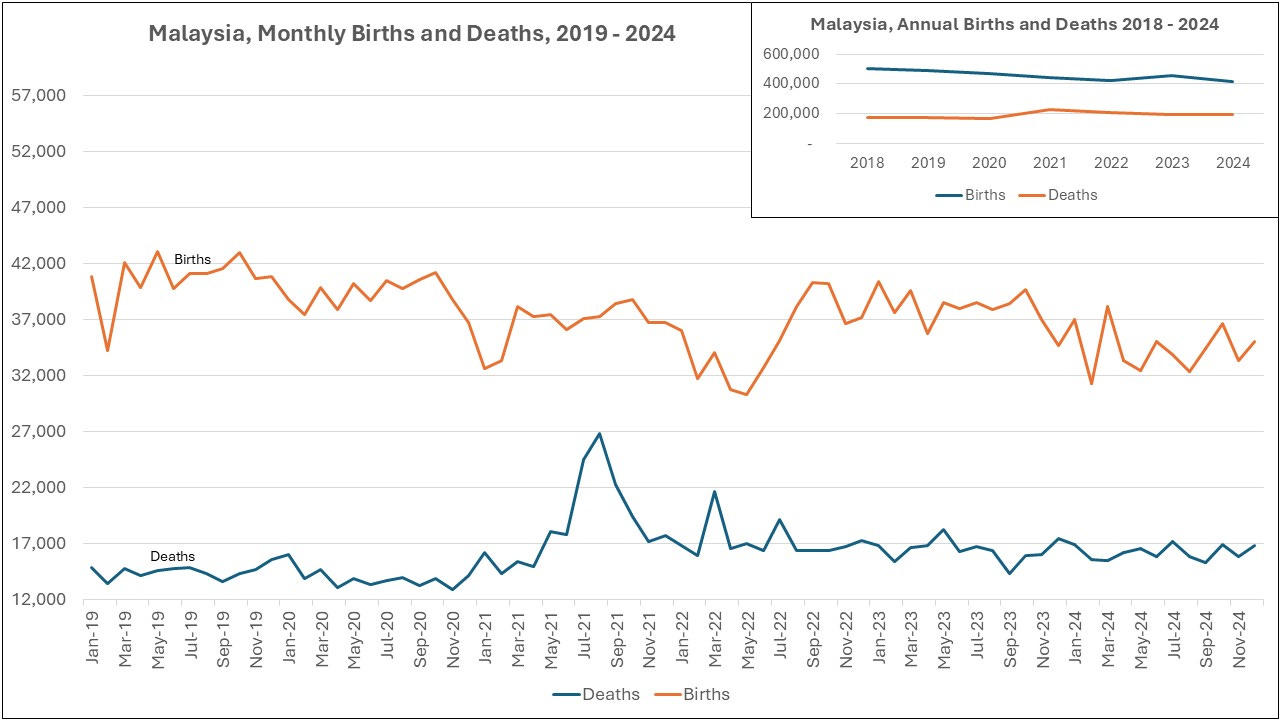
Monthly birth and death patterns show marked changes particularly into 2021, with the big death spikes temporally related to C-19 Products rollouts. Malaysian deaths remain a step change above pre-pandemic levels.
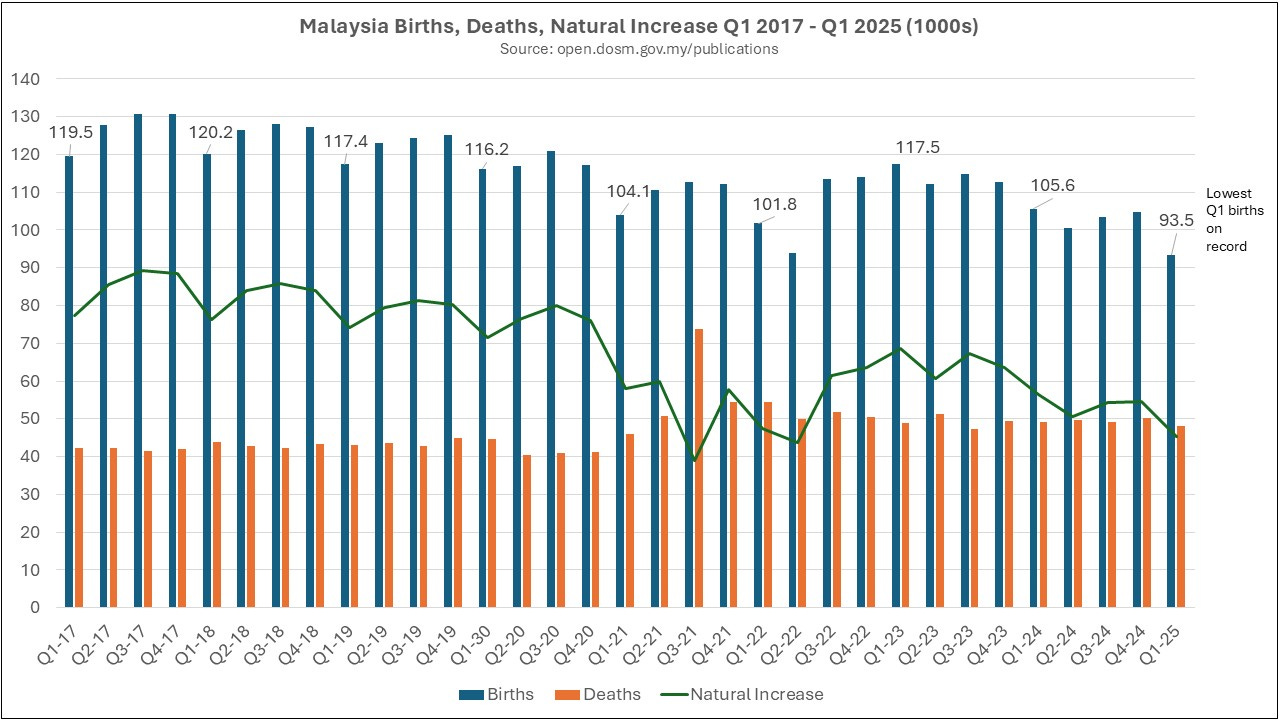
Malaysia has issued first quarter 2025 data. Births are at their lowest level, even while deaths have somewhat stabilized at their new higher post-pandemic levels.
7. Philippines Experienced HyperExcess Deaths in 2021, the Second Year of the Pandemic with 43.2% Excess Deaths.
Philippines Population is currently estimated at between 112 - 113 million based on previous census and birth and death data.
Covid-19 vaccination in the Philippines began on 1st March 2021. About 72.3% of the population accepted covid-19 vaccines. These were only given to children aged 5 and older.

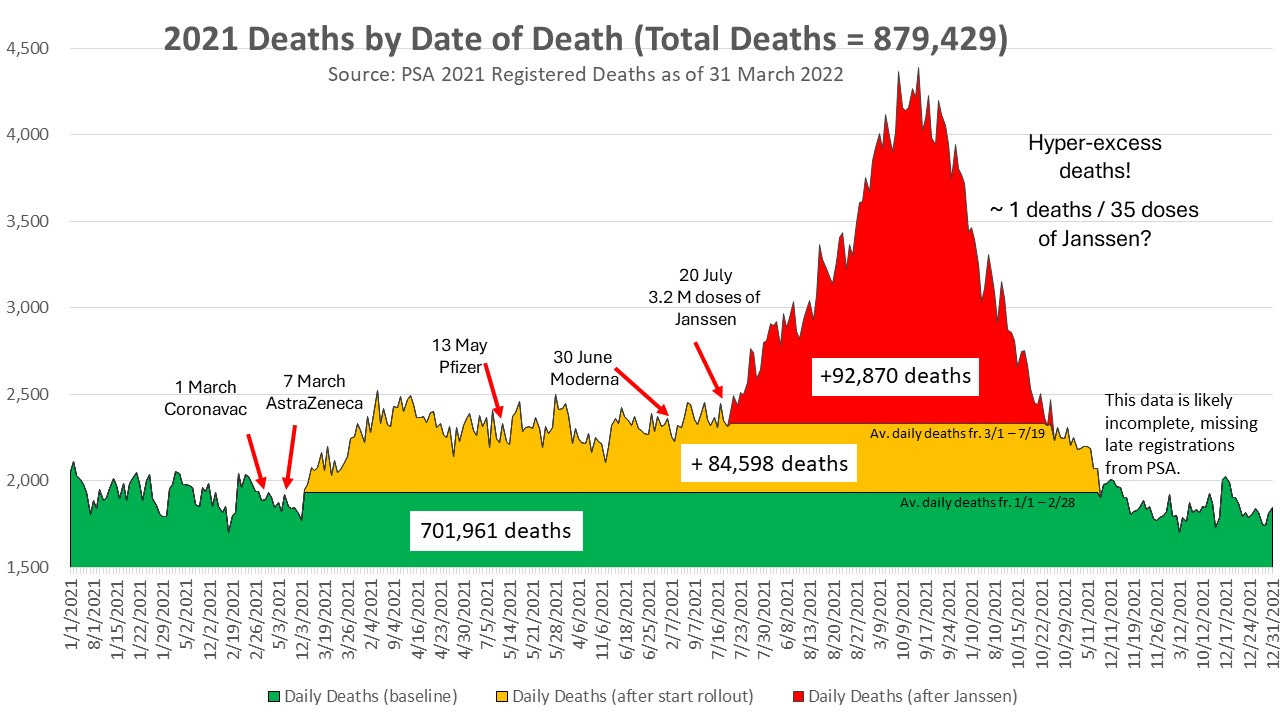
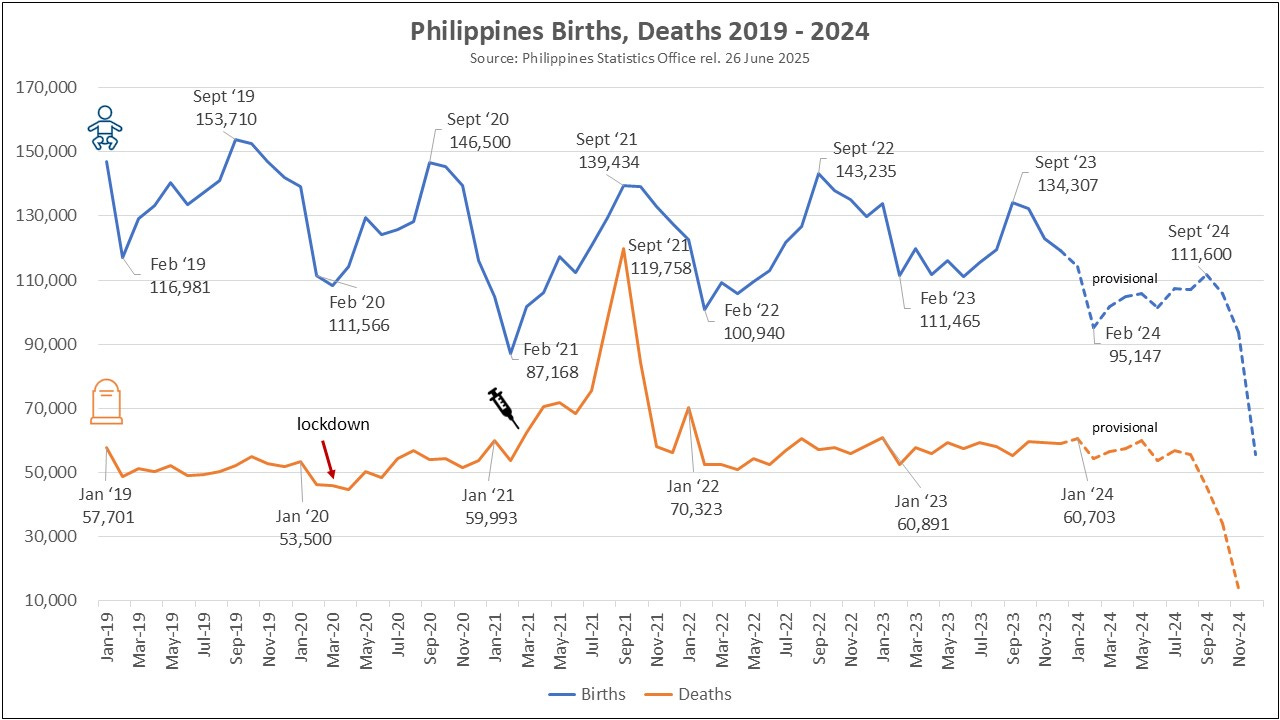
Deaths in Philippines rose immediately concurrent with Covid-19 vaccine administration, and particularly with Janssen in July of 2021.
Philippines overall data shows increasing deaths over time. 2024 data is higher in the first quarter and then drops off by September (births) and May-June (deaths) due to incomplete data.
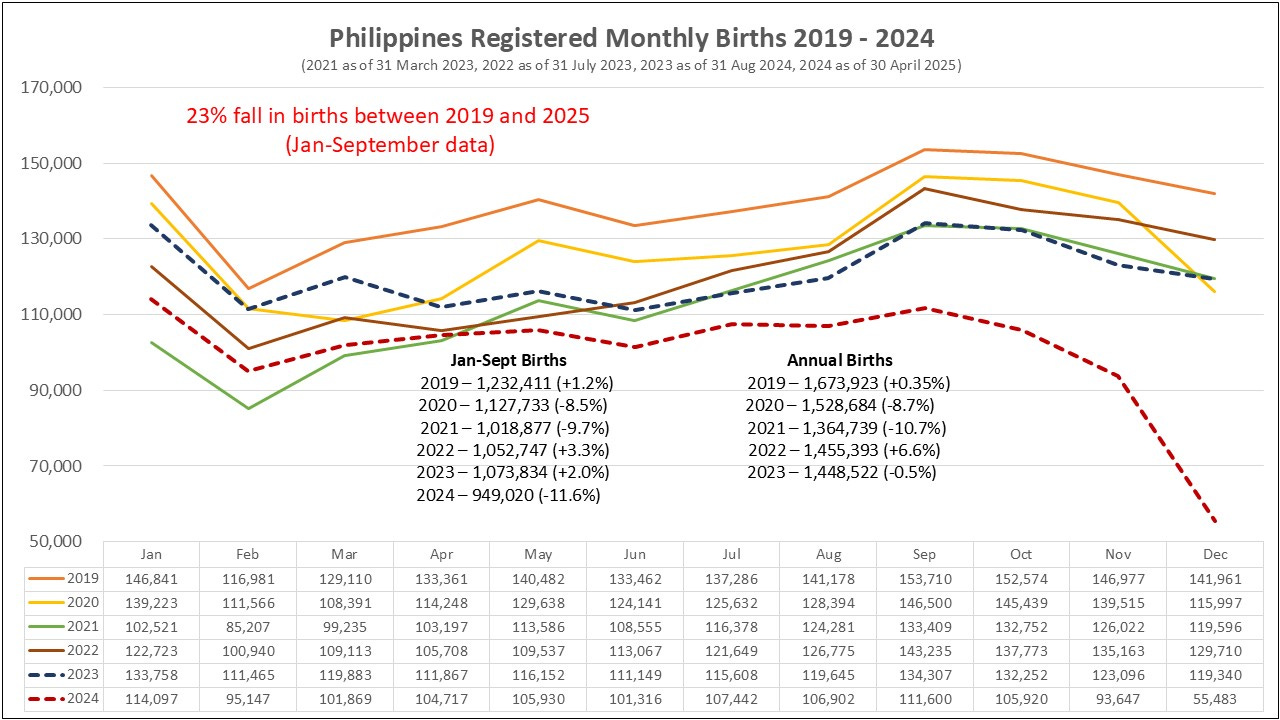
Philippines births have been steadily declining since 2012. There was some recovery from the steep drops of 2020 (-8.7%) and 2021 (-10.7%) in 2022, which rose by 6.6%. However, 2023 dropped by 0.5% and preliminary 2024 data hints towards a further drop in final data.
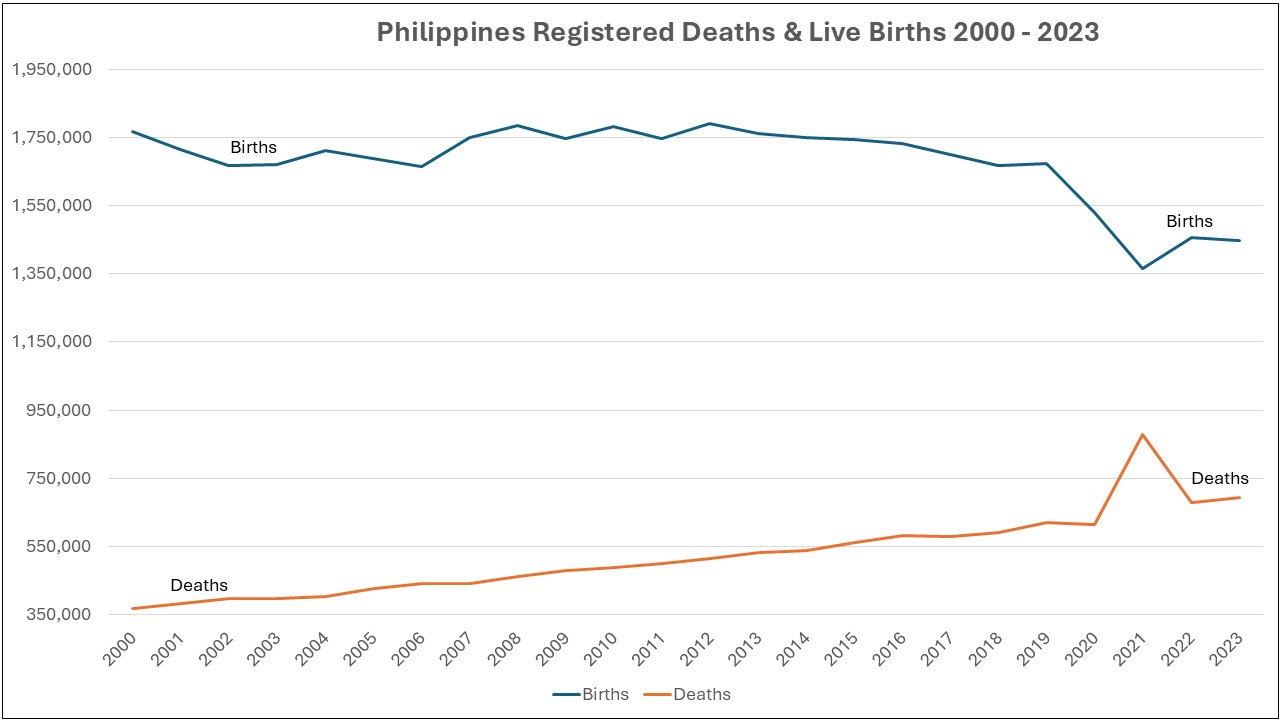
Finally, following are Philippines Births and Deaths, and Natural Increase over time. 2023 is the 4th year with a natural population increase below 1 million. The trending continues strongly downwards.
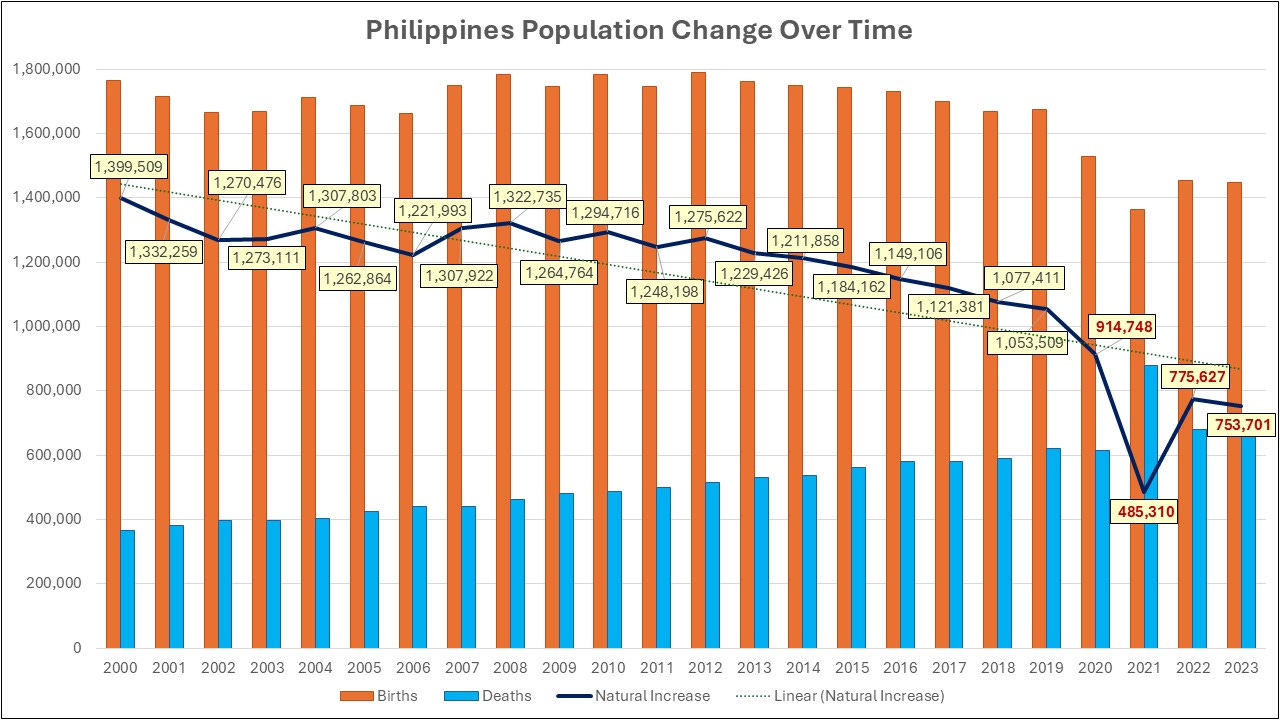
While births are still well above deaths, the Philippines has considerable outwards annual migration (temporary and permanent, more than 1 million new migrants a year) which can no longer be covered by the gap between births and deaths, and which will result in effective population contraction.
My latest, detailed article on the Philippines outcomes, here.
8. Singapore
Singapore had a population of around 6.04 million in 2024, an increase of 2% over 2023.
Singapore started roll out of Covid-19 Vaccination with the Pfizer product on 30 December 2020. The other main products used were Moderna and CoronaVac, the Chinese-made vaccine.

Covid-19 vaccines started administration in Singapore on 30 December 2020. 16.8% of the population had received at least 1 dose and 6.8% had completed primary series by 31 March 2021, which is when deaths started noticeably rising; deaths rose as uptake increased. Booster doses started on 14 September 2021 and there was a new high death spike in October 2021. Residents were advised to take a second booster 6 months after their first one. 6 months from 14 September 2021 is March 2022. There was a new unprecedent high spike in deaths in March of 2022.
Singapore continues to offer Covid-19 vaccines to residents from 6 months of age.

Singapore Population Outcomes
Covid-19 vaccination in Singapore started on 30 December 2020. To date some 92% of Singaporeans have taken Covid-19 vaccines.
Singapore’s 2024 data vital statistics was released on 28 February 2024. Births have increased slightly with a 0.5% increase over 2023 levels. Births are down by 13.7% compared to 2019, the last pre-pandemic year.
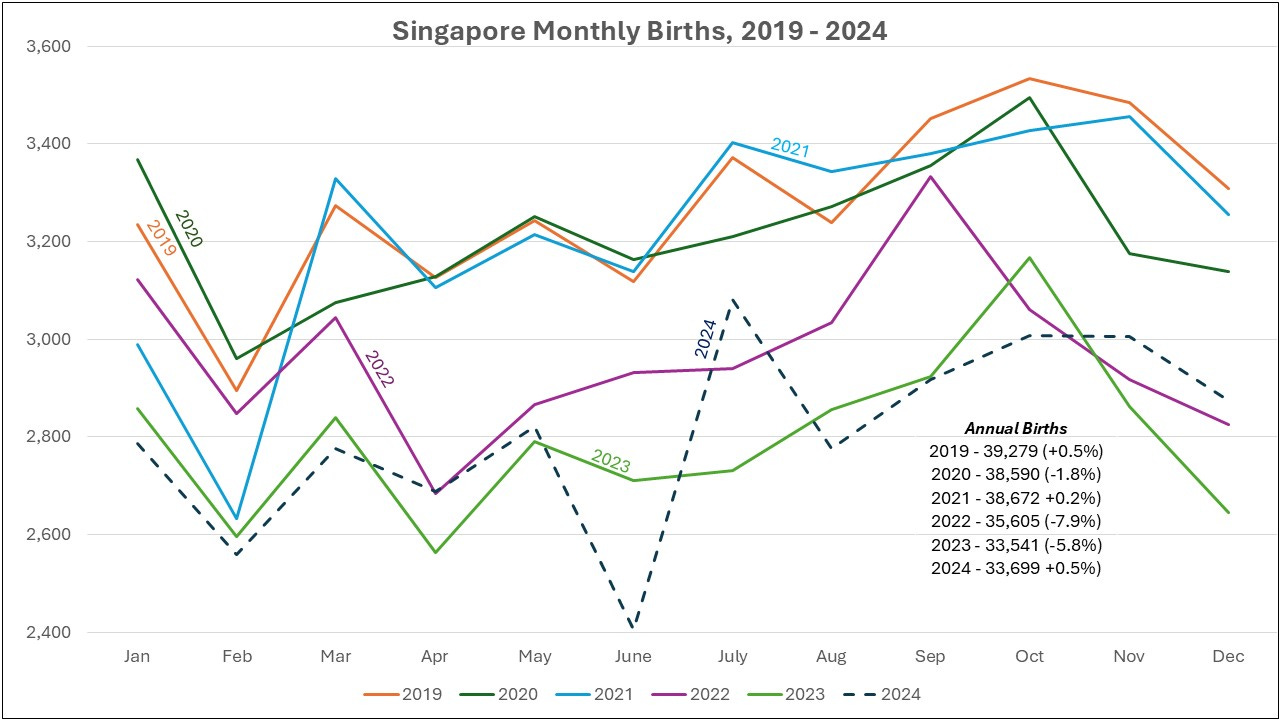
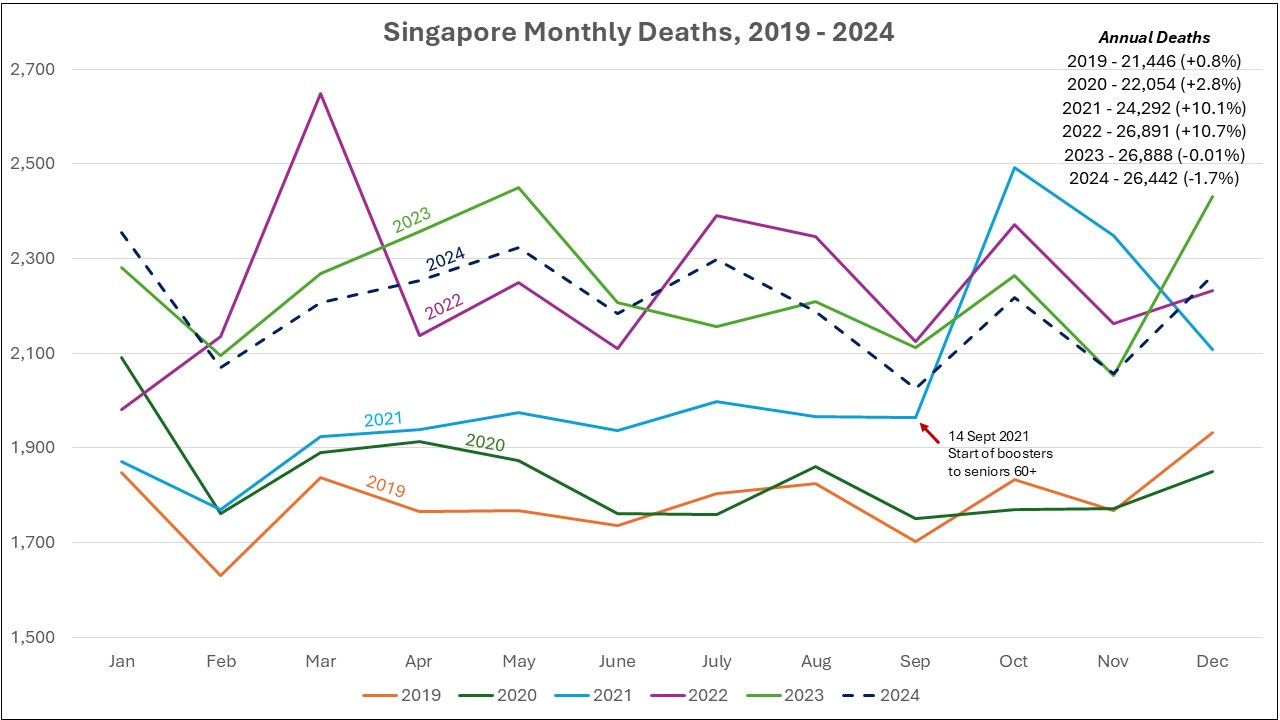
Deaths in 2024 have also decreased by 1.7% over 2023 levels. However, they are still 23.3% higher than 2019 levels. Deaths in 2020, the first pandemic year, were unremarkable and similar to, though slightly higher, than 2019. Covid-19 vaccine rollouts started in Singapore on 30 December 2020. While deaths had notably increased above prior year levels by May of 2021, the death inflection point came in October 2021, the month after the start of 3rd dose administration to the Singaporean population. Deaths rose by more than 10% in 2021 and 2022, black swan events in each year! Deaths have not dropped back to pre-pandemic levels in 2023 and 2024. The entire population is experiencing a step-increase in deaths.
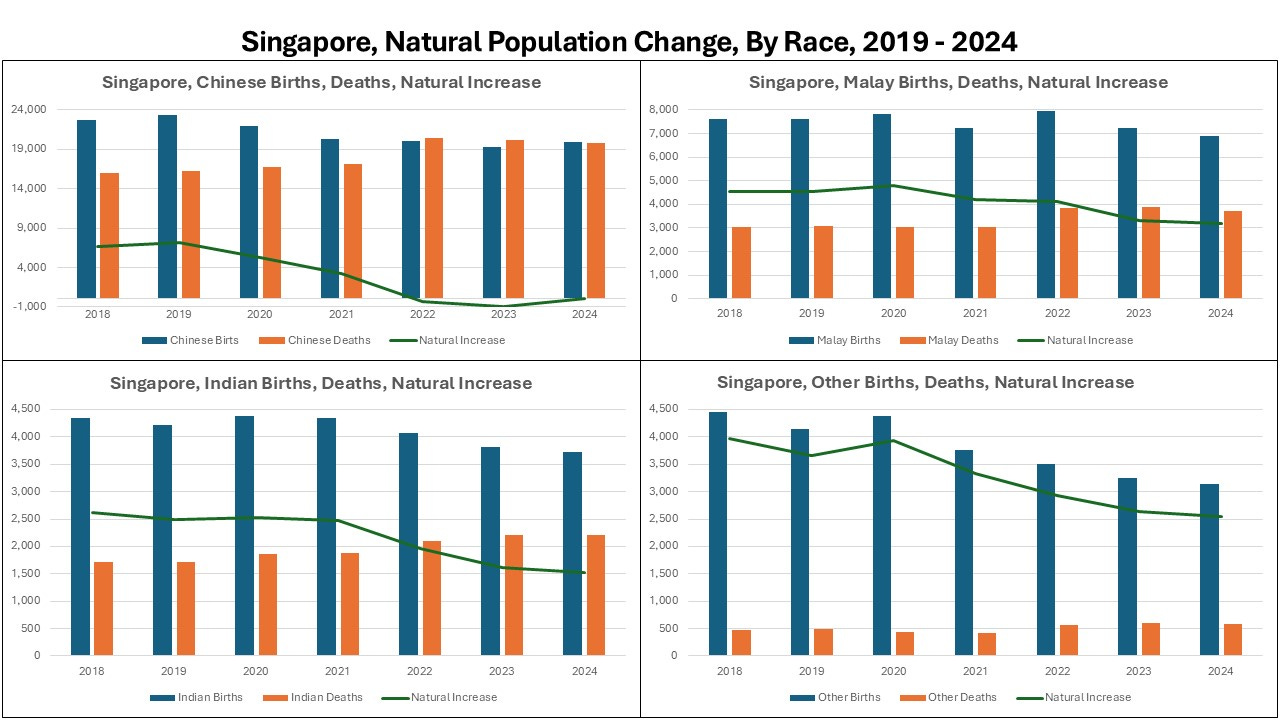
Singapore has an aging population. Births have been dropping and deaths rising over time. Notably dragon years typically have higher birth rates (2000, 2012, 2024). Indeed, there was some slight recovery of births in the latter half of 2024 which could be attributed to Chinese families welcoming their coveted dragon babies. However the birth spike in 2024 was far lower than the birth spikes seen in 2000 and 2012.

Examination of births and deaths by race shows that Chinese Singaporeans, the majority race in Singapore, have just barely returned to positive population growth after losses in 2022 and 2023. Malay, Indian and other births are still considerably higher than deaths and these nationalities have growing populations.
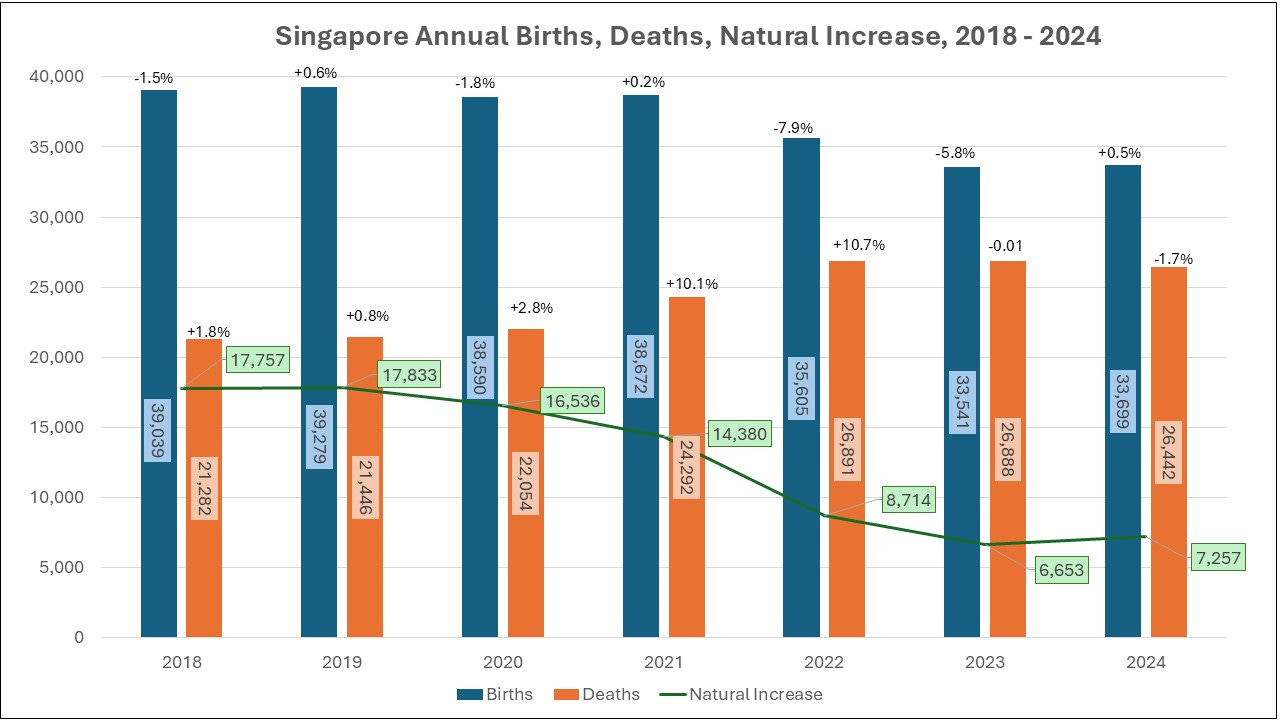
Singapore is maintaining positive natural population growth, for now, though growth has dropped by more than half from 17,833 in 2019 to 7,257 in 2024.
Changes in the age groups that died in 2024 showed that deaths increased particularly among younger Singaporeans aged 15 to 24, 30-34, 40 - 44, and elders aged 70-79. The rising deaths in elders can be partially explained by an aging population. The rising deaths among young people cannot be readily explained as natural in an advanced modern society with a shrinking younger population.
When broken down by age-group and over time, most striking are the increase in pediatric deaths in 2021 for 15-19 yo, and increases in deaths in younger kids in 2022 and 2023. Adults not too striking except for the 60 - 64 adults who showed a clear increase in deaths from 2021. Senior citizens, particularly the oldest ages, showed a large step change in deaths over the pandemic years.
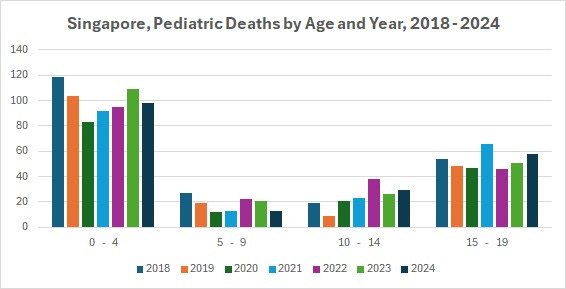
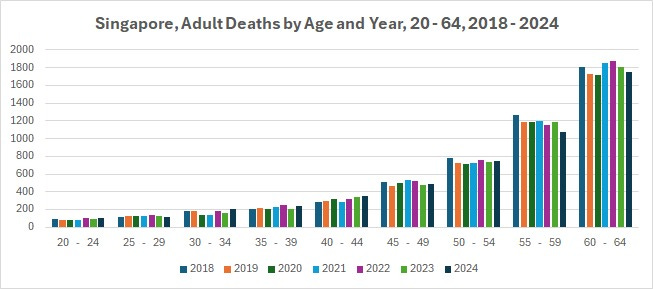
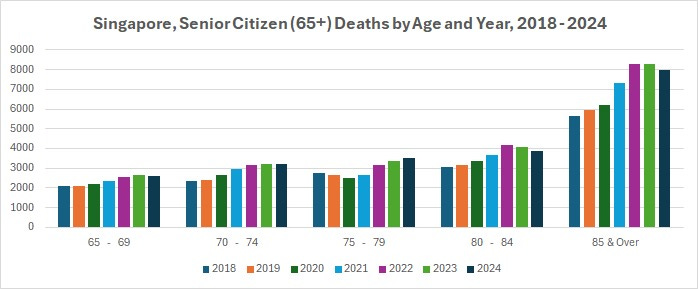
I did not find 2024 maternal death data in the sources that I accessed (it will available in the final annual report). However, stillbirths, perinatal and infant deaths remain higher than pre-pandemic levels in 2024.
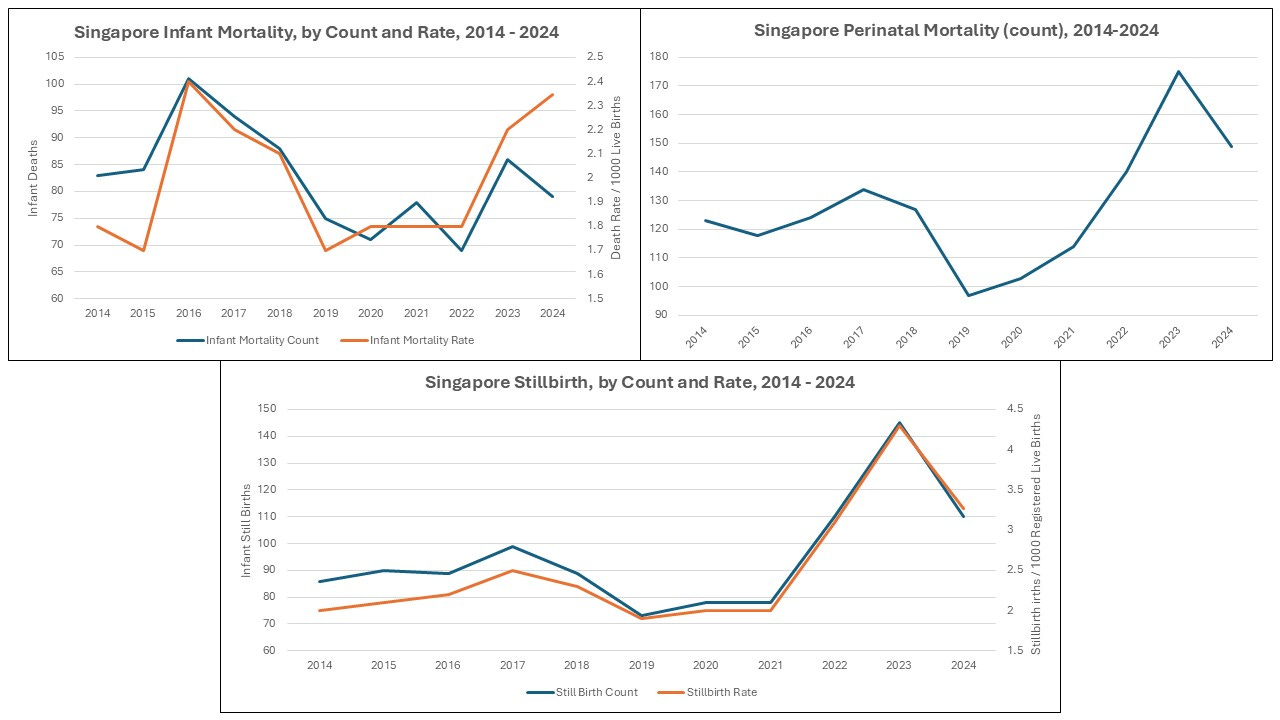
Monthly patterns of stillbirths and infant deaths are shown from 2017 to 2024. There is a clear inflection of stillbirths from June 2022. While infant deaths appear stable, they should viewed as alarming in the context of an overall decreasing number of births.

Covid-19 vaccination of pregnant women began in Singapore on 8th June 2021. Pregnant women in Singapore were prioritized for Covid-19 Vaccination.

Singapore still recommends Covid-19 vaccination for its population aged 6 months and older, but particularly for senior citizens.
9. Taiwan’s Population Is Crashing with Deaths Far Outnumbering Births
Taiwan’s population was estimated at 23.396 million in January 2025.
Seven SARS-CoV-2 vaccines were available in Taiwan, including AstraZeneca, four mRNA vaccines (SARS-CoV-2 messenger RNA-1273, bivalent mRNA-1273.214 [original and omicron BA.1] and bivalent mRNA-1273.222 [original and omicron BA.4/BA.5], Moderna, USA; BNT-162b2, BioNTech/Pfizer, Germany) and two protein-based vaccines (MVC-COV1901, Medigen, Taiwan; NVX-CoV2373, Novavax, USA). The first COVID-19 vaccination program commenced in March 22, 2021.
Taiwan’s natural population growth became negative in 2020, the first year of the pandemic reflecting large jumps in deaths and falling births. 93.5% of Taiwan’s population have received at least 1 dose of Covid-19 products.

Vital statistics by month since 2019 are set out. Births and deaths were not highly variable in 2019 which was the last year of natural population growth. Deaths rose in 2021 and then soared into 2022 and 2023 reflecting a catastrophic deterioration in Taiwan’s population health. 2024 data show a slight decrease in births of 0.5% and a slight decrease in deaths of 1.6%. Natural population loss in 2024 was 67,251. Taiwan has lost 1% of its population since 2020! February 2025 has worst deaths to date since start of the pandemic. Births are at their lowest ever level in 2025.
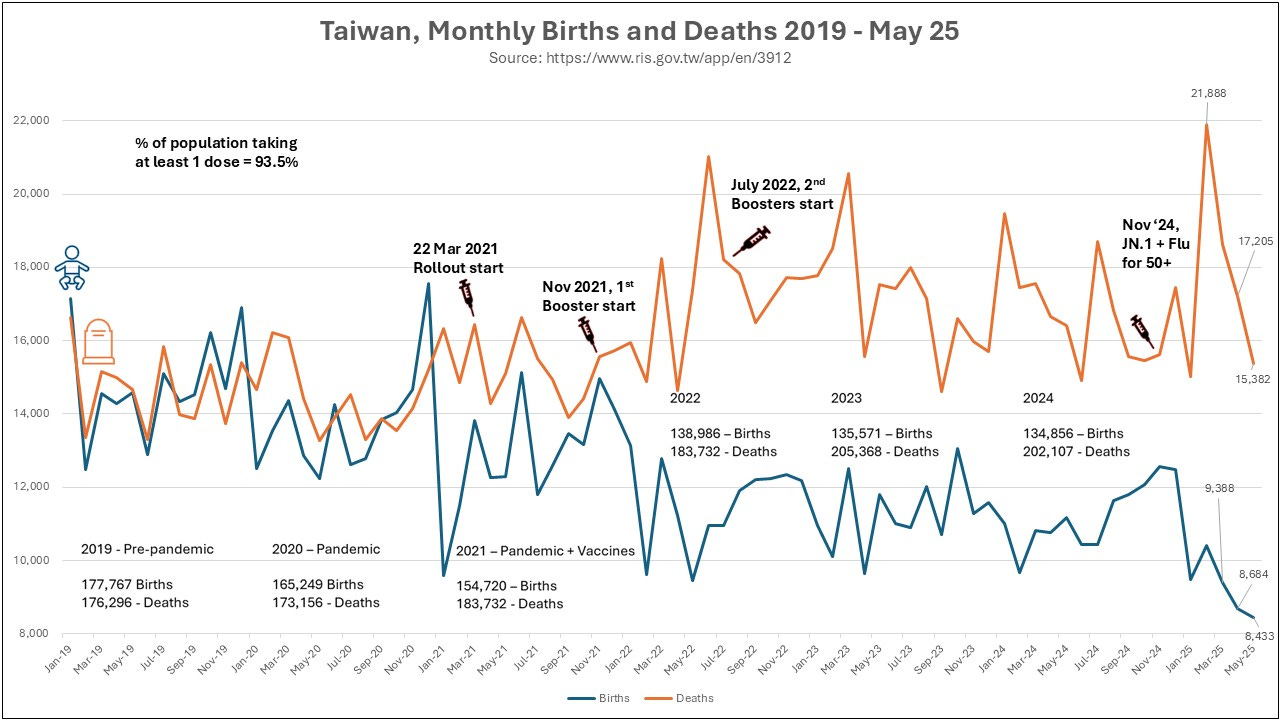
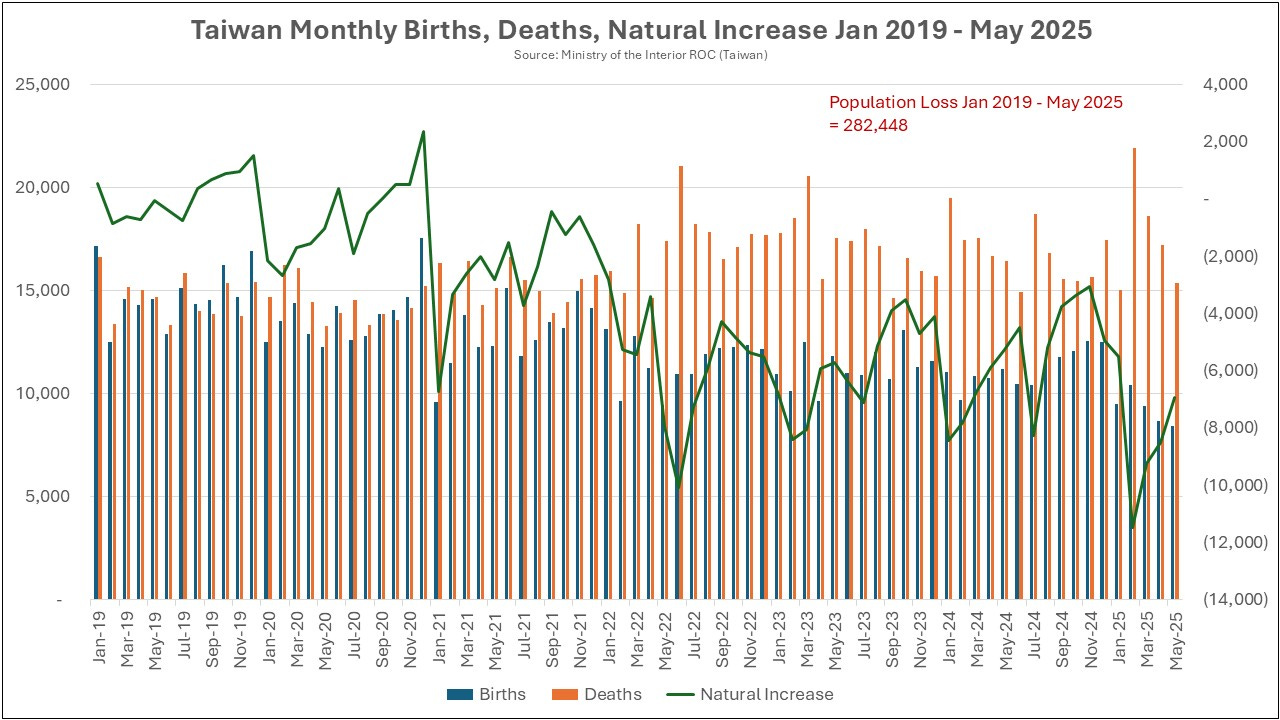
In November and December 2024 flu and covid-19 vaccines were pushed. In February 2025, Taiwan recorded their highest mortality to date!
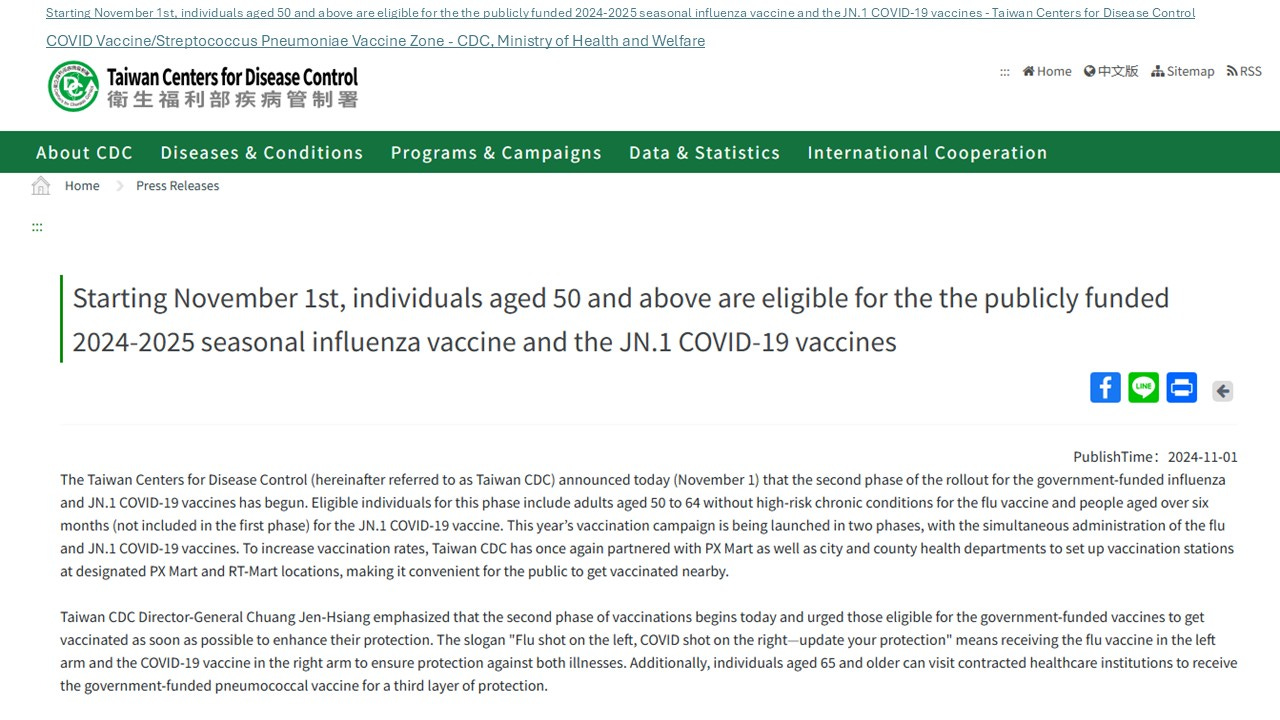
From mid-June 2025, Taiwan has shortened the interval between covid-19 vaccine doses for elderly and vulnerable persons to 2 months (from 6 months). I fully expect a new wave of deaths in coming months.

Conclusion
Hong Kong, Japan and Taiwan have ongoing population loss with Deaths > Births.
Macau still has natural population growth, but numbers are declining sharply and population loss will occur in the next year or two if the current trending continues. Hong Kong and Macau can maintain their populations with migration from China.
Australia (birth data not presented), Malaysia, and Philippines still have positive population growth which is likely to continue for the next few years. However, the rising deaths and sharply dropping births raise concerns for future growth and the timeline by when population contractions will start.
Movement of populations through migration will also impact total populations and prospects for economic growth and development. Australia has large net inward migration increasing population, while Philippines’ outward migration is likely to already be contributing to population decline.
All information and images may be shared. Please acknowledge this substack and my work as your source.